The Ipê's Lesson in Survival

Story: Rainbow Nelson
Images: Rainbow Nelson & GPAA
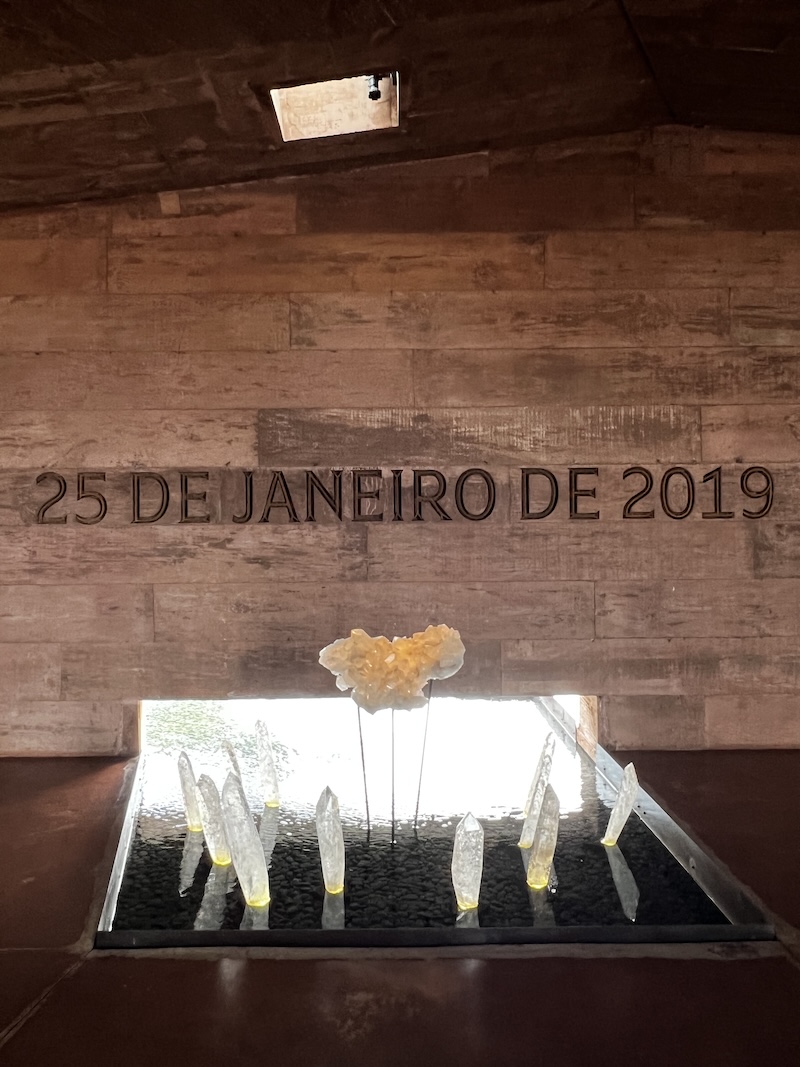
On a Spring morning in the hills of Minas Gerais, 272 yellow ipê trees are flowering. They stand in rows above ground that still bears scars from one of Brazil's worst industrial disasters—the collapse of the Córrego do Feijão dam on January 25, 2019, which killed 272 people in a wave of toxic mud.
The trees are not decoration. They are the landscape's response to human failure.
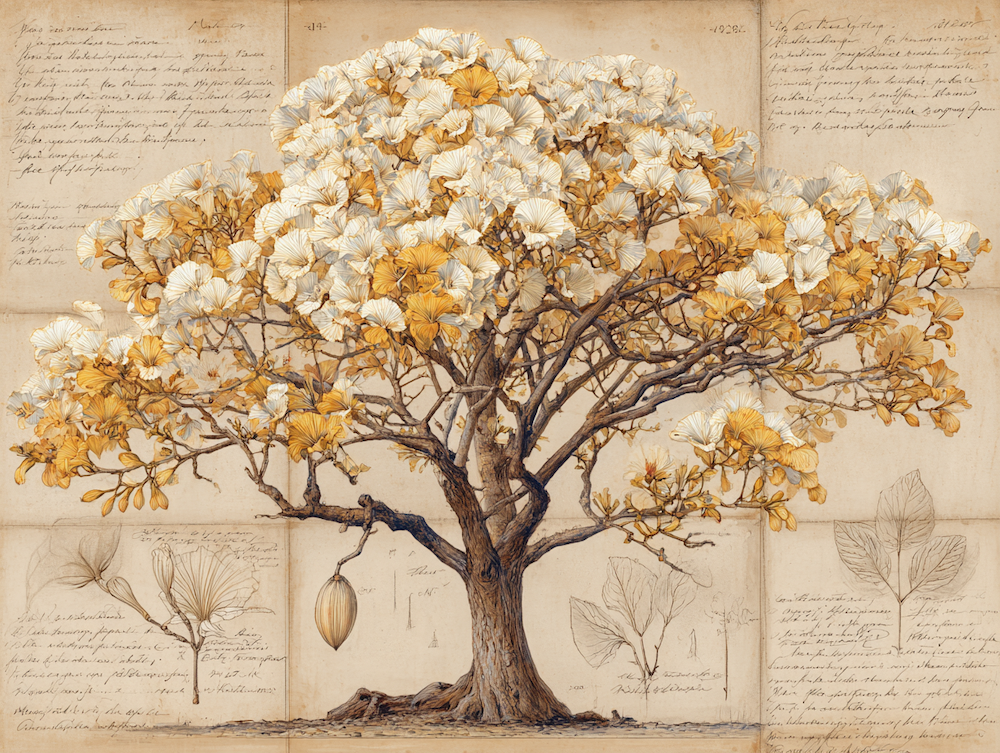
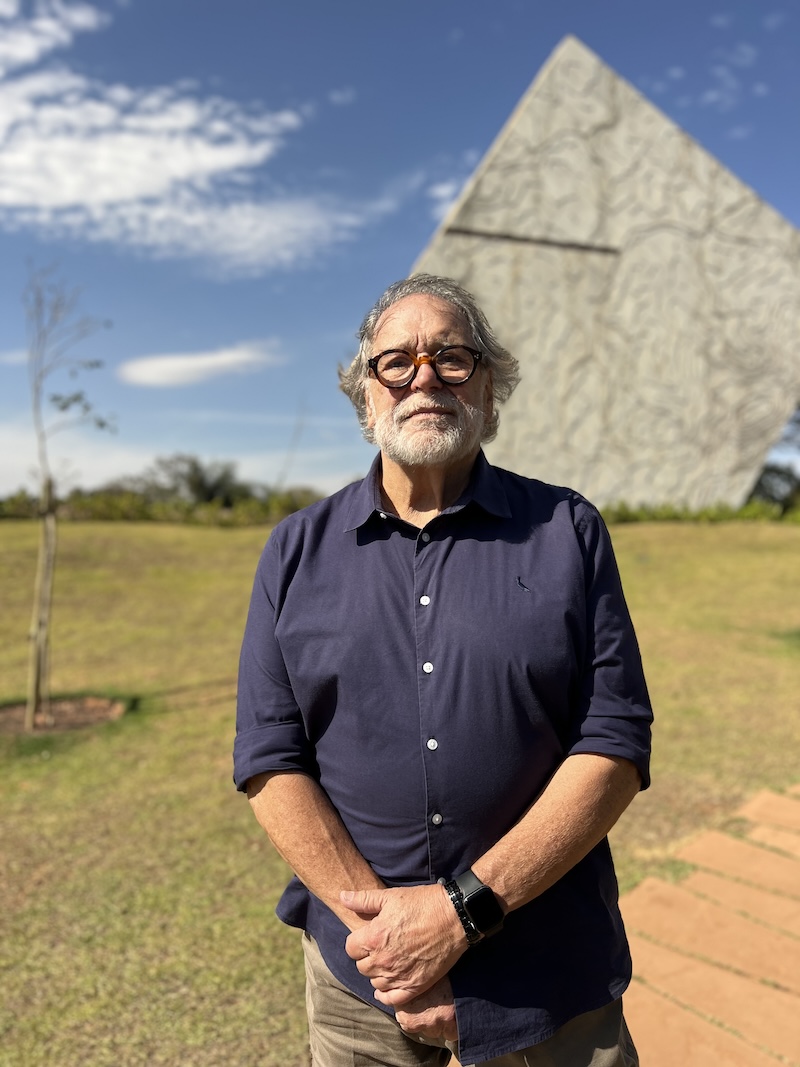
Architect Gustavo Penna chose the ipê (Handroanthus chrysotrichus) for the Brumadinho Memorial because it teaches resilience without sentimentality. "The ipê has a message," he says, standing beneath the canopy. "In summer it is full of leaves to make an overhang. In winter it loses all the leaves to let sunlight through. And when the sun presses, it turns yellow, full of flowers. Life goes on. Never lose hope. It is a manifestation of hope."
The ipê is Brazil's national tree, but its significance here runs deeper than symbolism. It survives by reading the seasons—offering shade when the sun is fierce, letting light through when warmth is needed, blooming in drought as if to prove that life persists even in the hardest conditions. These are not abstract metaphors. They are ecological strategies honed over millennia, lessons written into the tree's physiology.
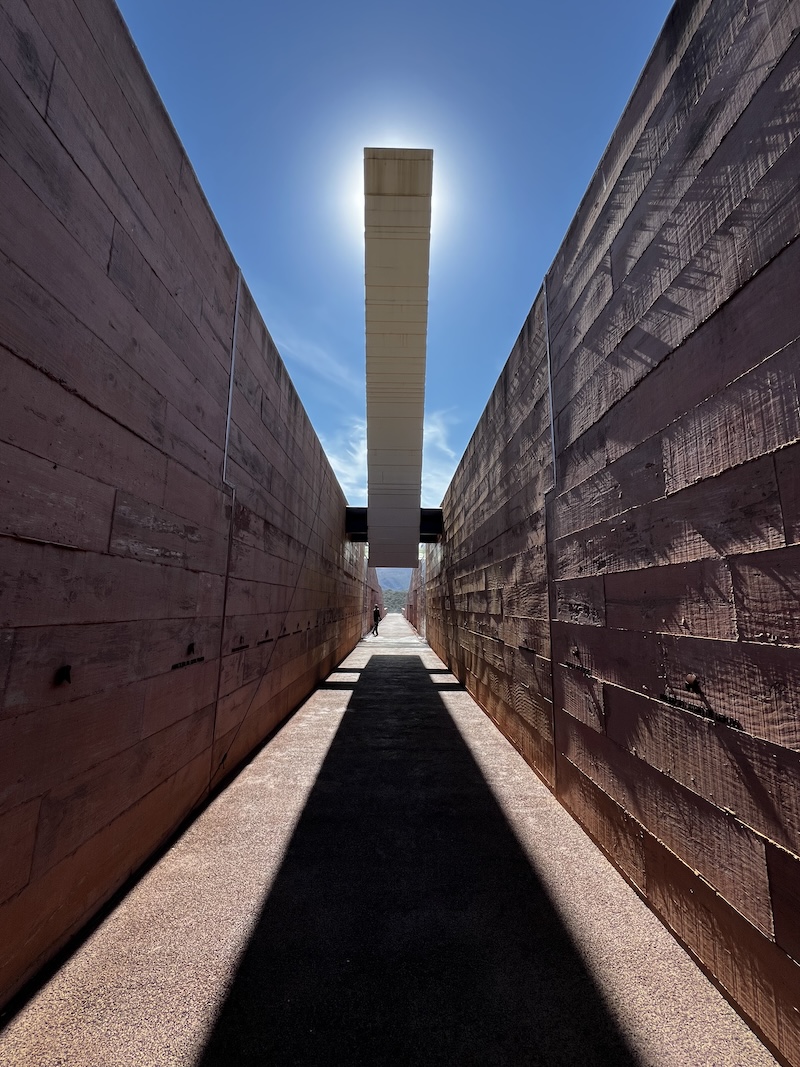
At the memorial, the ipê trees grow above a 230-meter fissure cut into the earth—a jagged wound that points directly toward the site of the dam's collapse. The crack is intentional, permanent. "The first image that came to me was the crack," Penna says. "At that moment, the disaster was inevitable. That crack was in my head. And it's there for eternity. This fissure is the question. This fissure is the denunciation. This fissure is the line that separated life from death."
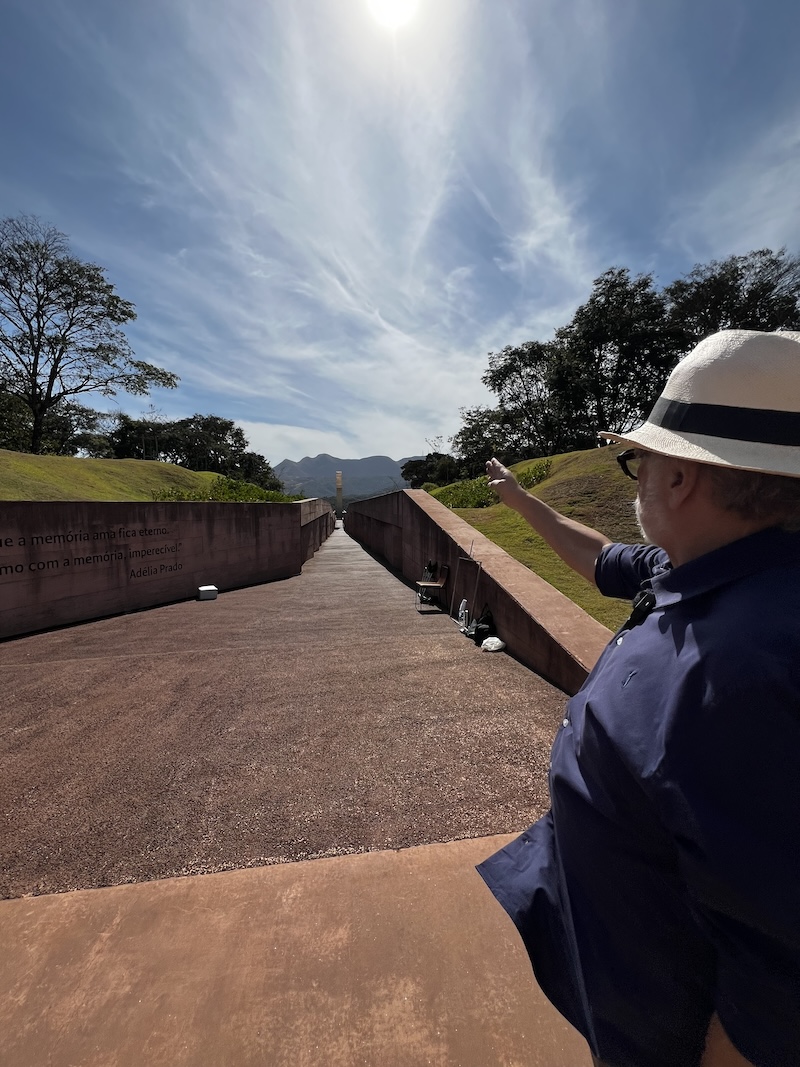
The memorial refuses to heal. The ground refuses to close. And above it, the ipê trees mark time in their own way—not with clocks or commemorative plaques, but with leaves and flowers, shade and light, the seasonal rhythms that continue whether we are watching or not.
Penna's design for the Brumadinho Memorial began with listening. "I stand here with great humility, because in all honesty I have never gone through, never suffered, what you are suffering," he told the families of the victims when he presented his proposal. "So the work I'm presenting today was built on the intent of being useful to you—in a transcendent way, not a practical usefulness but a transcendent one. I wanted to give meaning, symbolism, to all of this."
The memorial was built while bodies were still being recovered. It opened while grief was raw. Unlike traditional memorials erected decades after tragedy, this commemorative space emerged from the disaster itself, shaped by conversations with Abrum—the association of victims' families, led by women Penna describes as "extraordinarily brave."
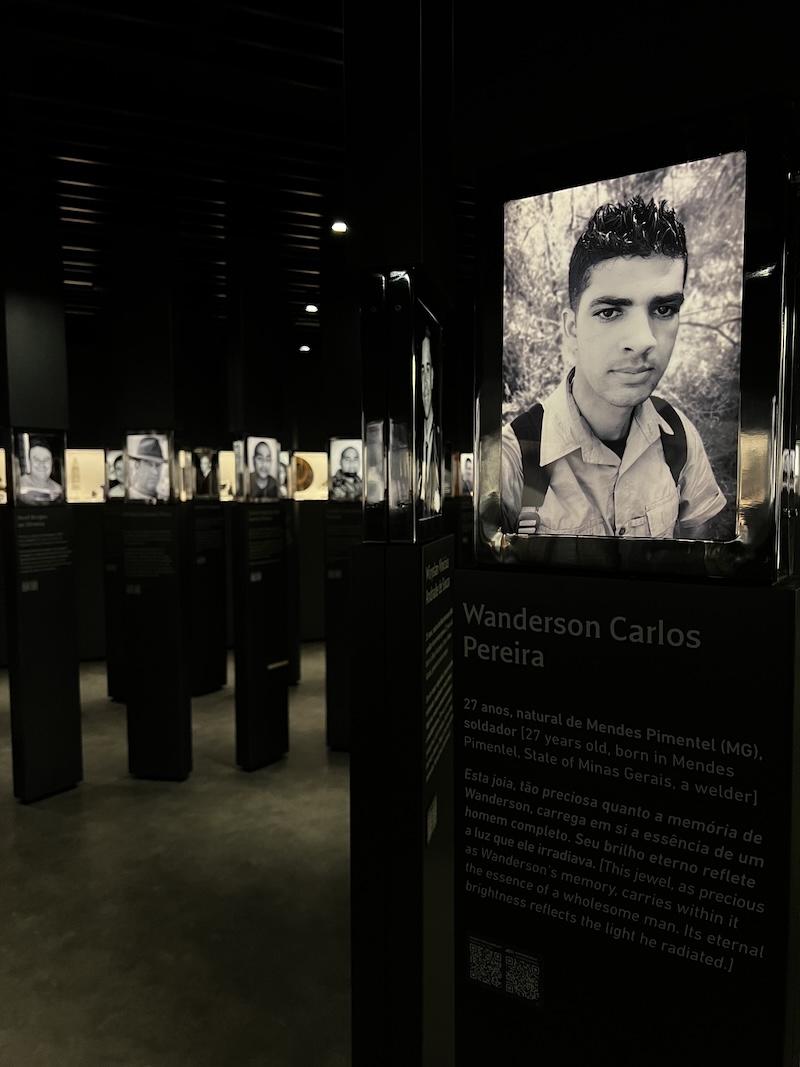
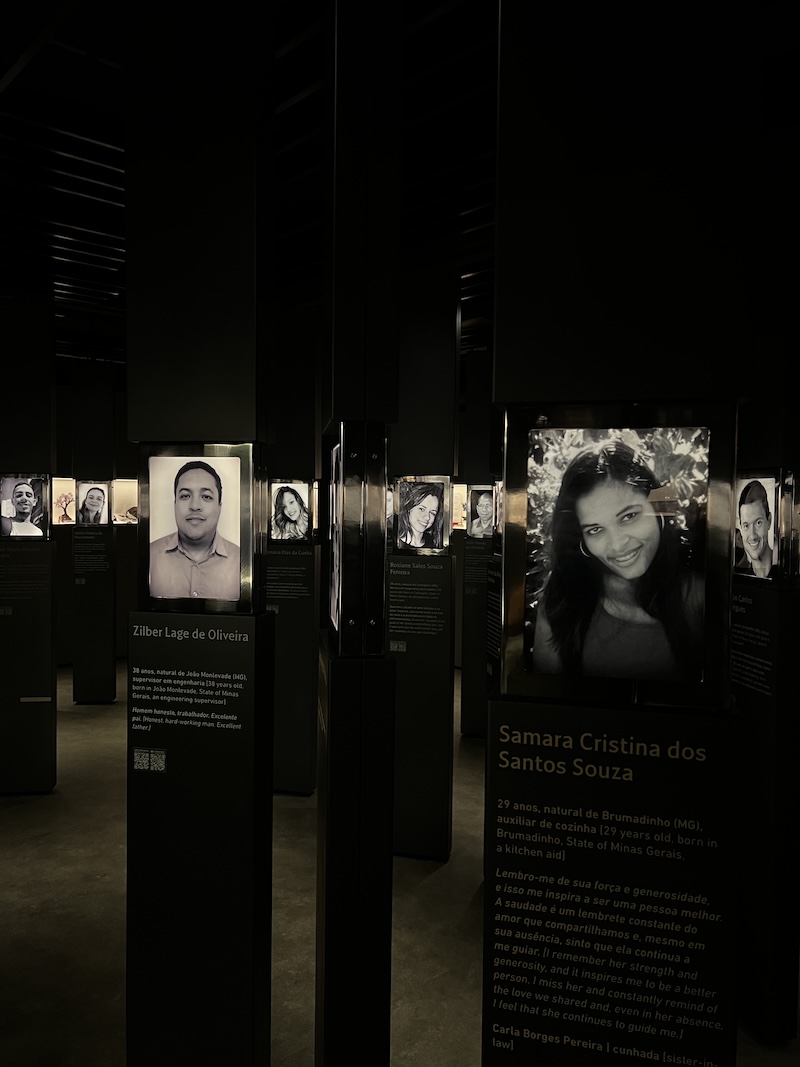
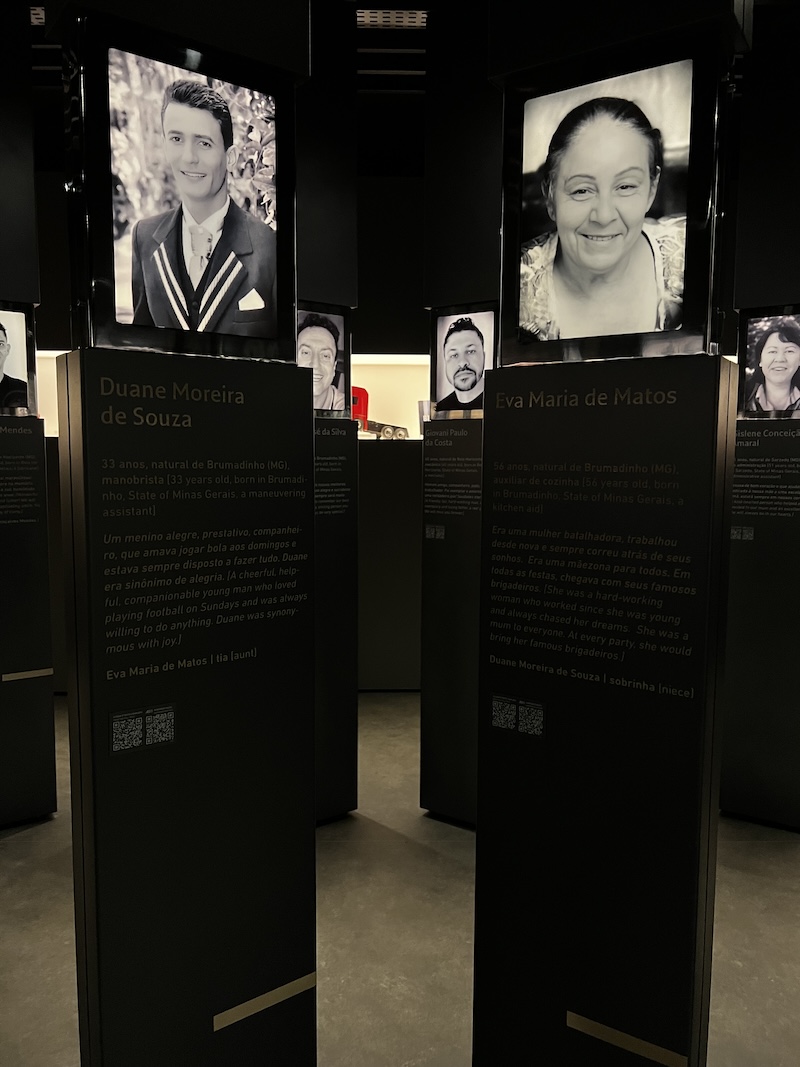
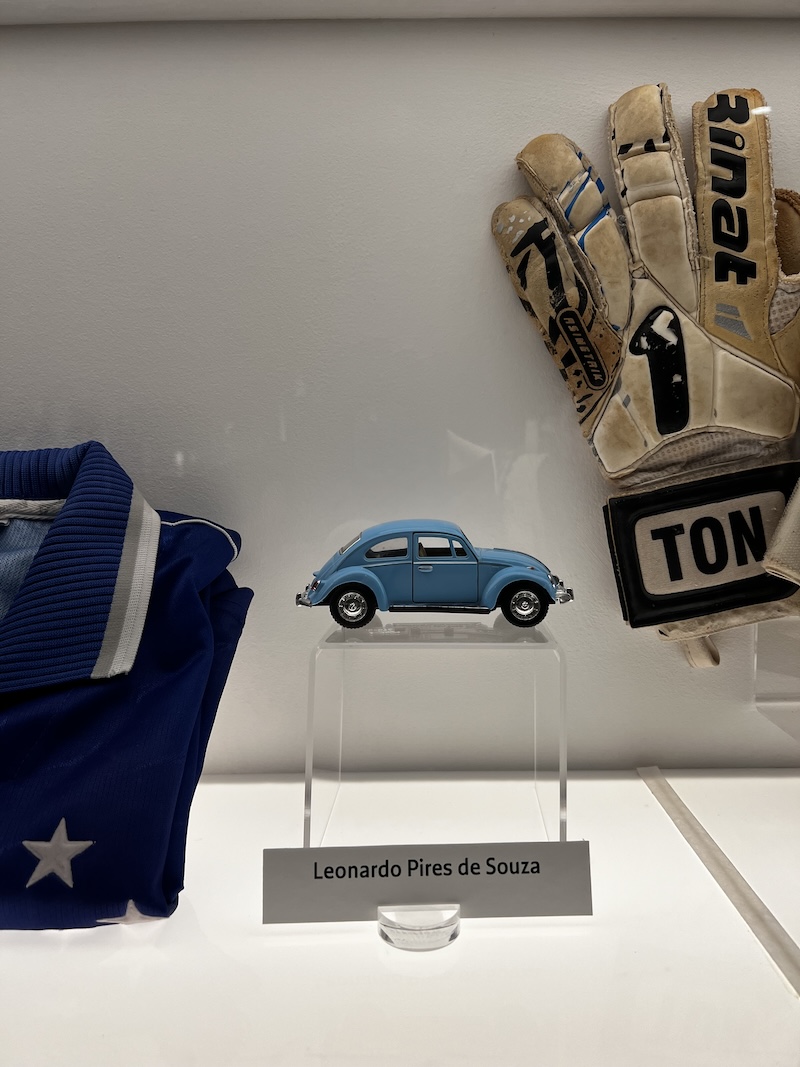
The families gave their loved ones a name: jewels. Penna placed a heart-shaped geode of quartz crystals at the center of the memorial's entrance pavilion, positioning it beneath a small rectangular skylight. On January 25th each year, at exactly 12:28 PM—the moment the dam collapsed—a beam of light cuts through the ceiling to strike the geode, flooding the space with the light that failed to arrive for the victims on that day.
"These pieces that emerge—that's a tribute to the name the community itself gave to their loved ones: jewels," Penna explains. The geode is not metaphor made stone. It is stone recognized as metaphor—matter that already carries the weight of what cannot be said.
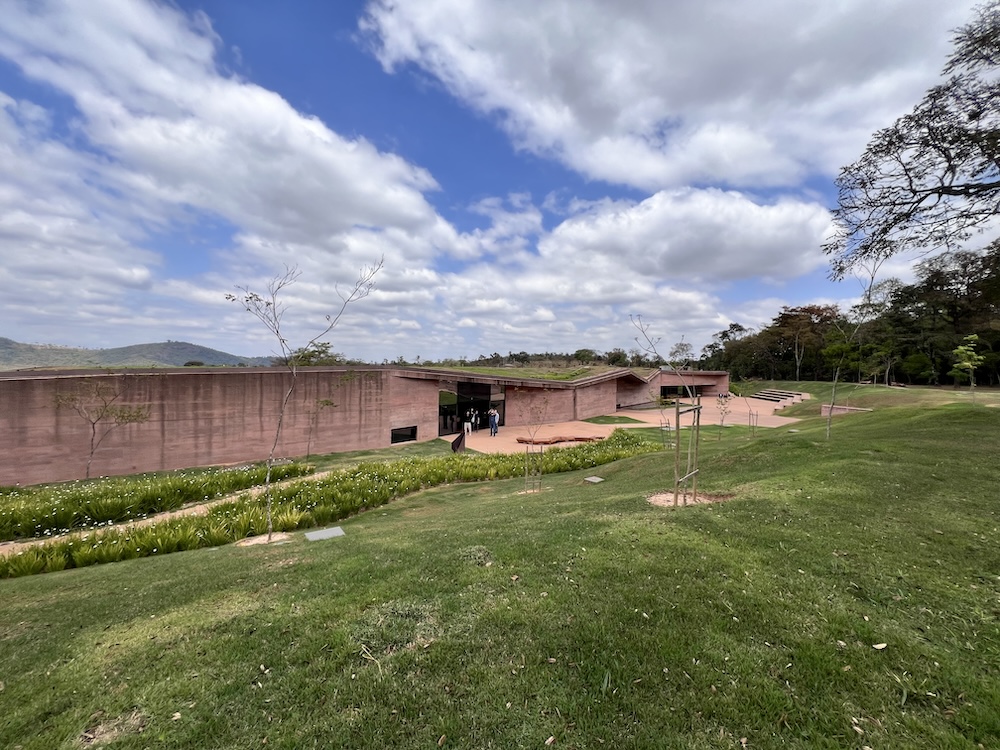
The memorial's materials come from the disaster itself. The concrete is colored with red pigment extracted from the toxic iron ore waste that buried 251 Vale employees as they ate lunch and 21 local residents. "The whole region was stained, struck and dyed with this same colour," Penna says. "And it's with this same matter that it's being built."
This decision—to build the memorial from the substance of the tragedy—parallels the ipê's survival strategy. The tree does not flee harsh conditions. It adapts to them. It drops its leaves in winter not as retreat but as reorientation, allowing sunlight to reach the ground beneath. It blooms in drought as if to declare that scarcity is not the end of beauty.
The ipê flower appears throughout the memorial as a recurring motif—its five-petaled form carved into stone, cast in metal, painted on walls. Each flower represents one of the 272 victims. Each flower is also itself: a living thing that will return each year, whether anyone is watching or not.
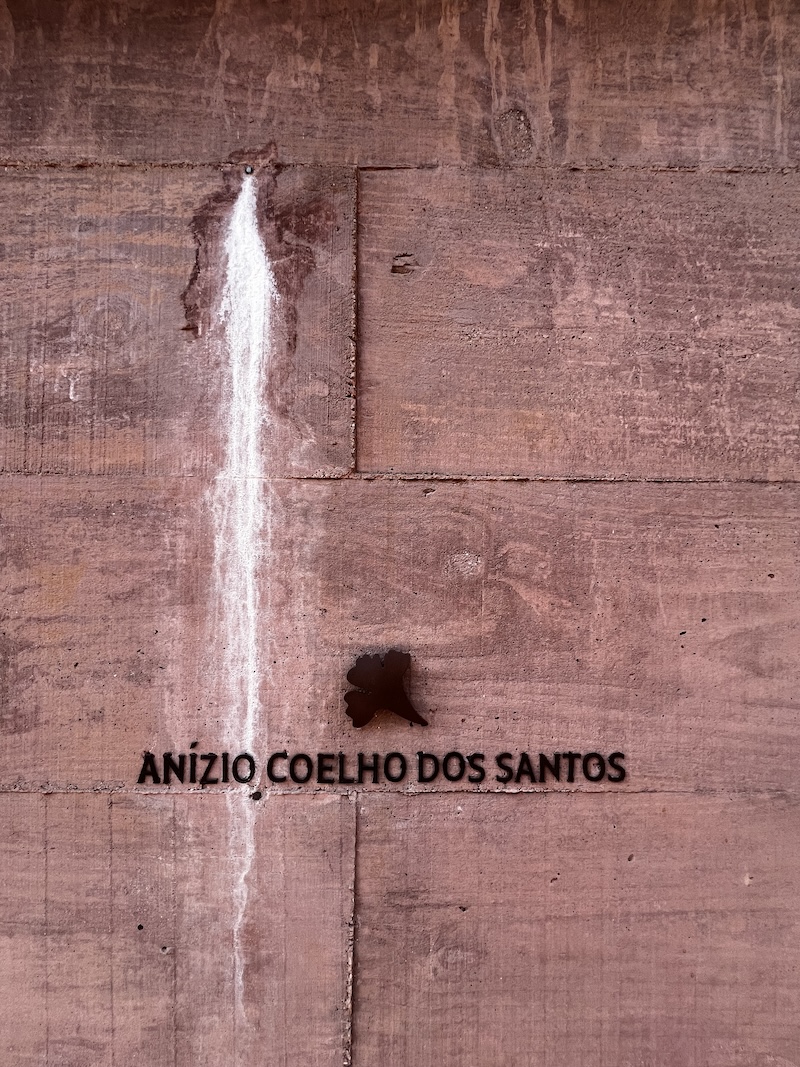
As visitors walk the length of the fissure, they encounter the names of the dead engraved on concrete walls. Calcium leaching from the cement around the iron reinforcement rods creates the impression that the walls themselves are weeping—a phenomenon Penna did not plan but accepted as the landscape speaking through his materials. "I like this idea of not being finished," he says. "I like that. It ages with class. It ages with dignity—it gains dignity."
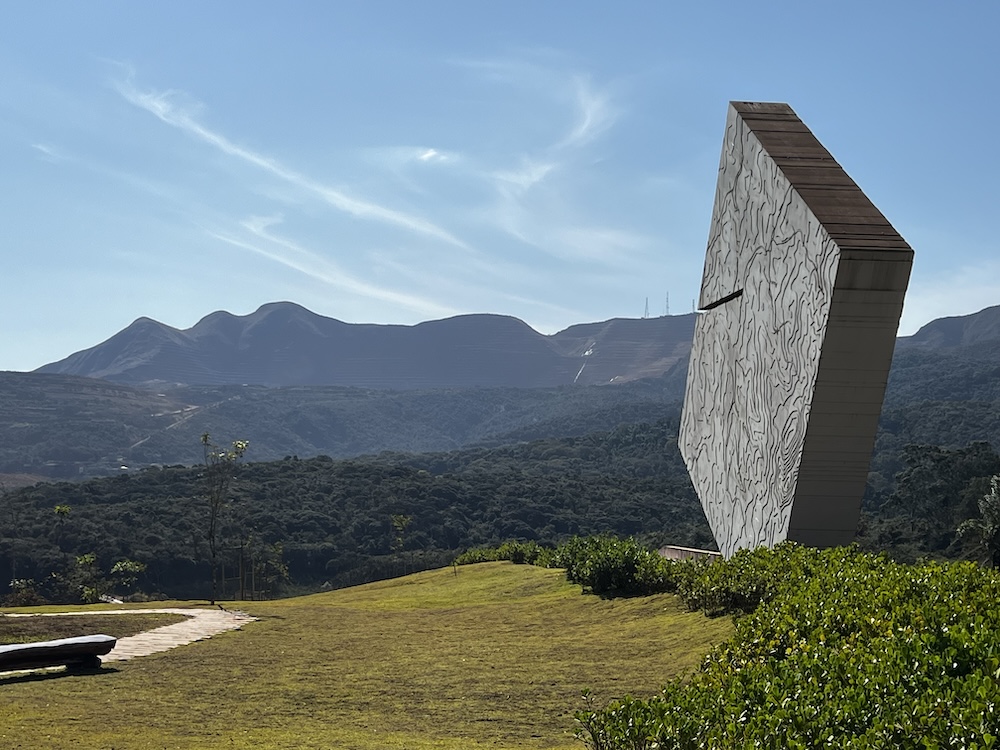
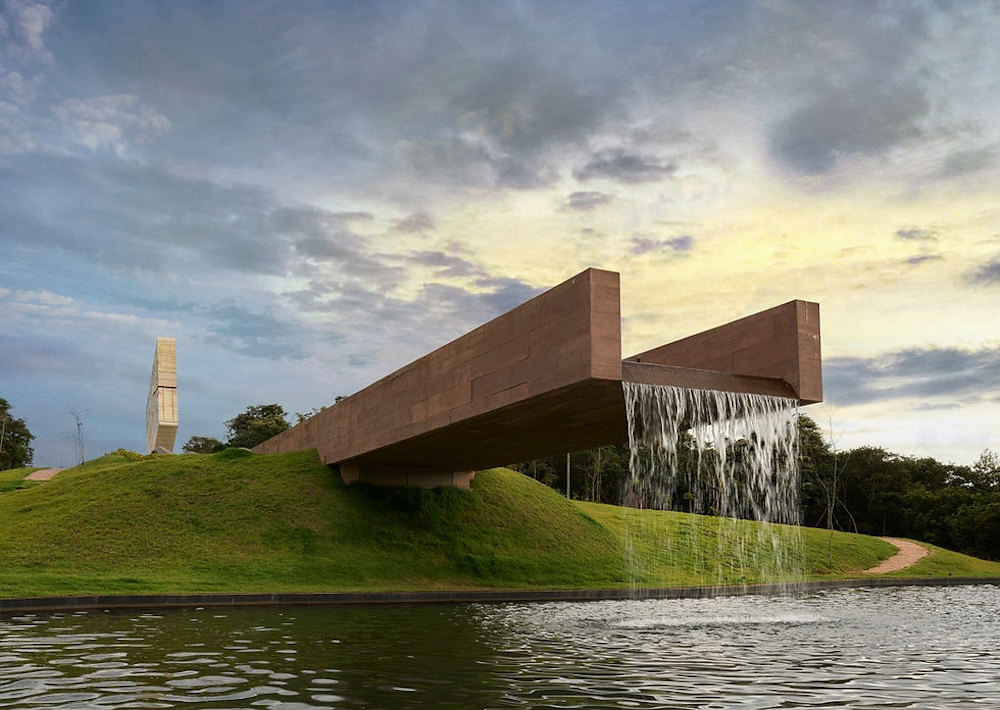
The memorial's depth forces visitors to look up at the sky while standing in the wound of the earth. At the midway point, three spaces have been carved into the ground: one to the left (memory), two to the right (testimony and a sacred space holding the recovered remains). Emerging from these underground chambers, visitors encounter a tilted steel structure suspended above the landscape—a square head that cries.
"Man's unique creation is the square," Penna says. "The square doesn't exist in nature. If you see a square somewhere man was there. Why does this square head cry? Because it is the finitude, it is the fallibility of man thinking that he controlled everything. That day he didn't control anything. This tragedy is caused by the negligence, greed and stupidity of man."
Two streams of water flow from the weeping head, converge, and fall into a commemorative lake. The square is tilted to represent the imbalance—the hubris of believing we have mastered what we have merely disturbed.
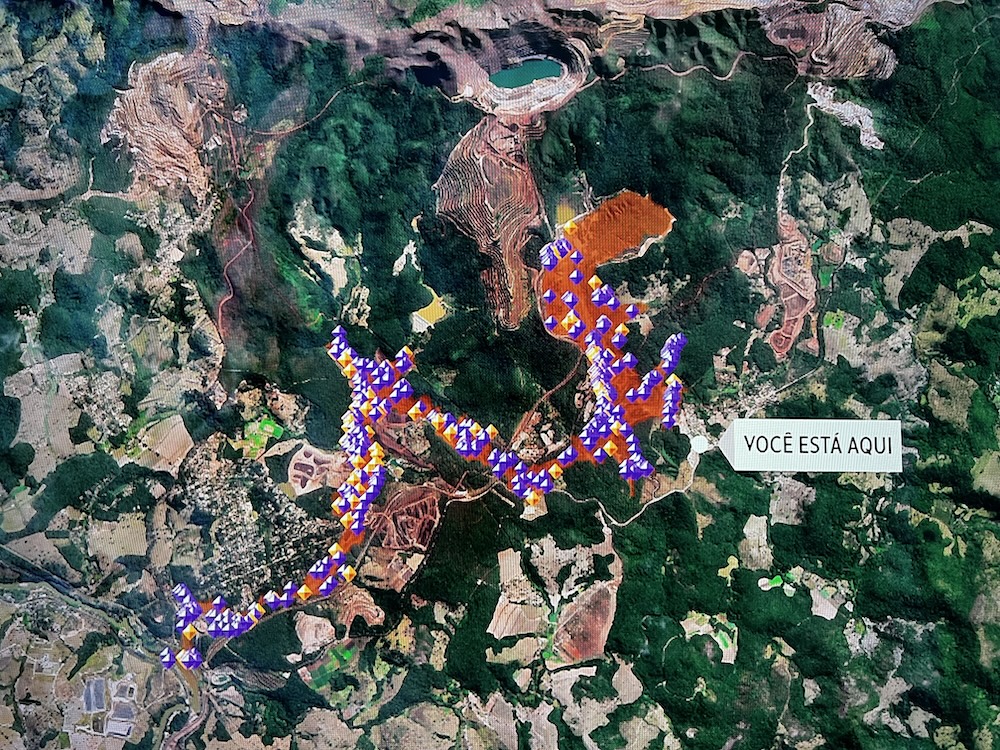
As well as the human tragedy, the dam collapse unleashed 12 million cubic meters of toxic mining waste, destroying over 125 hectares of native forest, devastated agricultural land, and severely polluted the Paraopeba River. The toxic sludge killed local aquatic life, contaminated water supplies, and severely impacted the Pataxó indigenous communities.
The ipê's seasonal transformations offer a temporal architecture that runs parallel to Penna's spatial one. In summer, when the memorial grounds are hottest, the trees provide shade—a canopy of green leaves that moderates the brutal sun. Families gather beneath them. Children play in the filtered light.
In winter, the ipê drops its leaves, letting sunlight reach the ground. The memorial becomes brighter, warmer. The mountains of Minas Gerais stand visible against the sky, their contours etched in clarity. This is when the trees rest, when their energy moves inward, when they prepare for what comes next.
And then, in the season of drought—when the earth cracks and the air shimmers with heat—the ipê blooms yellow. Thousands of flowers erupt from bare branches, turning the memorial grounds into a field of gold. The families call this the moment of hope, the sign that life continues. But the ipê is not sentimental. It blooms in drought because that is when pollinators are most active, when reproduction is most likely to succeed. The beauty is real. The strategy is older than beauty.
"When the ipê drops its leaves, it makes a yellow carpet," Penna says. "It's the most dazzling thing. I think that would be a day of joy—you can at least speak of life continuing, a sign of hope. I keep imagining this whole floor all yellow."
This cyclical transformation—green to bare to yellow, year after year—creates a calendar written in living tissue. The memorial does not ask visitors to remember a single frozen moment. It asks them to witness time unfolding, to see that grief and growth, loss and renewal, move through the same ground.
At the memorial's highest point, visitors reach a viewpoint overlooking the valley transformed by the disaster. Below, trucks move back and forth, carrying equipment for the continued excavation to recover the remains of the last two victims.
From this vantage, the full scale of the fissure becomes visible. It runs 230 meters through the landscape, pointing like an arrow toward the exact site where the dam broke. The crack is perfectly aligned. It does not waver. It does not heal.
Penna speaks of the fissure as eternal. "This fissure can no longer be whole. It can be very well glued, but you'll always find there's a crack in that spot. A crystal glass with a fissure has already lost its wholeness."
The ipê trees understand this. They do not try to erase the seasons. They move through them. Winter does not apologize for its bareness. Drought does not hide its harshness. The tree accepts what comes and responds with what it has—shade, light, flowers.
The memorial, like the ipê, refuses resolution. It does not offer closure. It offers presence—a place to stand in the wound, to feel the passage of time, to witness the yellow flowers returning each year as proof that something continues.
Penna did not set out to make a memorial. "I never imagined that I would make a memorial in my life," he says. "After I experienced this, I feel like it has changed architecture for me. I was able to stand with the victims, create a tool of protest, of indignation. A fortress where the feeling of opposition to the erasure of this tragedy can live, a place that is against forgetting."
Forgetting, he insists, is the second death. The first death is biological, sometimes tragic. The second is the death of memory, the moment when a name disappears, when a face fades, when the world moves on as if nothing happened.
The ipê trees prevent this second death not through argument but through their simple persistence. They will be here next year, and the year after, and the year after that. They will bloom when the drought comes. They will shed their leaves when winter arrives. They will mark time in a language older than human speech.
Standing beneath them, visitors encounter a truth that architecture alone cannot convey: that survival is not the same as victory, that resilience is not the same as forgetting, that the landscape holds lessons we have barely begun to learn.
The yellow flowers will fall. They will carpet the ground. And in that moment—that brief, dazzling moment—grief and beauty will occupy the same space, the same soil, the same impossible present.
The ipê says: life goes on.
The memorial says: but we do not forget.
The Ipê's Lesson in Survival
Listening to the landscape, learning from nature