Listening to the Land: Cuixmala

Story: Rainbow Nelson
Photography: Davis Gerber
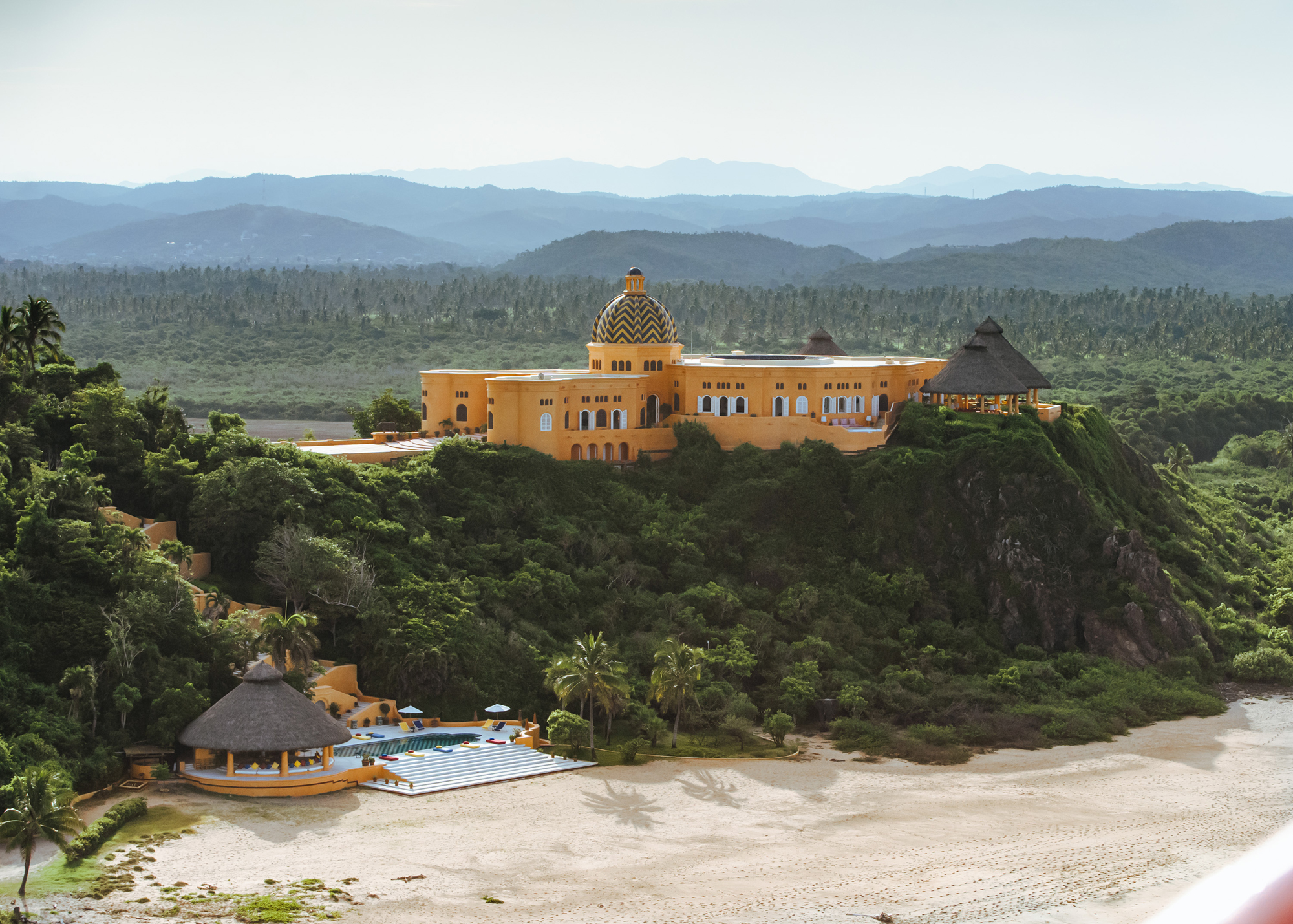
On Mexico's Pacific coast, where the Sierra de Manantlán descends through tropical dry forest to meet the sea, a 33,000-acre sanctuary holds a quiet argument with the modern world.
The name Cuixmala means, in the old language, "where the soul goes to rest.” It is not merely an idyllic, luxury beach retreat.
It is a forty-year experiment in what happens when you place life—ecological, communal, spiritual—at the center of every decision, and ask everything else to serve that purpose.
The imperious Cuixmala does not stand alone. High in the mountains of Colima, beneath the shadow of an active volcano, Hacienda de San Antonio—a 5,000-acre working plantation—operates as its counterpart: independent but linked, sovereign but connected.
Between the two sits Mexico’s first and only privately-owned nature reserve, the Chamela-Cuixmala Biosphere Reserve — 33,000 acres of tropical dry forest protected by the Goldsmith family since 1993.
Together, they embody something one visionary family learned from the land itself: that no place exists in isolation. More trees planted in the highlands mean more fish in the coastal waters. A watershed protected at its source flows clean to the estuary. Stewardship means understanding the flows that connect mountain to coast, forest to ocean, one community to another.
This is not metaphor. It is ecology. And it is the foundation of a worldview that runs through three generations of a remarkable family with the deepest of sensitivities to their surroundings.
To understand Cuixmala and Hacienda de San Antonio, one must first understand the connection between another bio-dynamic duo, the Goldsmith brothers, Edward—known to those that loved him as Teddy and his younger brother James.
Inseparable in their thinking, one provided the resources that made these sanctuaries possible, the other the philosophy that gave them their meaning.
In 1969, Teddy founded The Ecologist, one of the world's first environmental magazines. For the next four decades, he articulated a holistic vision that placed human societies within the web of life rather than above it.
He spoke of climate change, biodiversity, and the importance of rooted communities long before these became mainstream concerns. He challenged the assumption that economic growth equaled progress. He insisted that traditional cultures and local knowledge held wisdom that industrial civilization had forgotten.
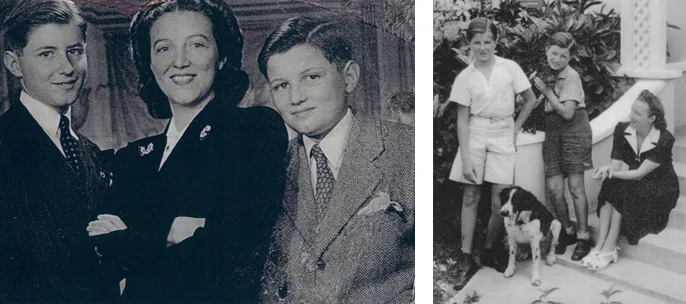
Teddy was the family's shaman—the one who saw furthest and spoke most clearly about what was possible. His influence shaped his brother's thinking profoundly.
When Sir James, knighted by the Queen at the height of his business career, began to question the very system that had rewarded him so handsomely, he was walking a path Teddy had been clearing for years.
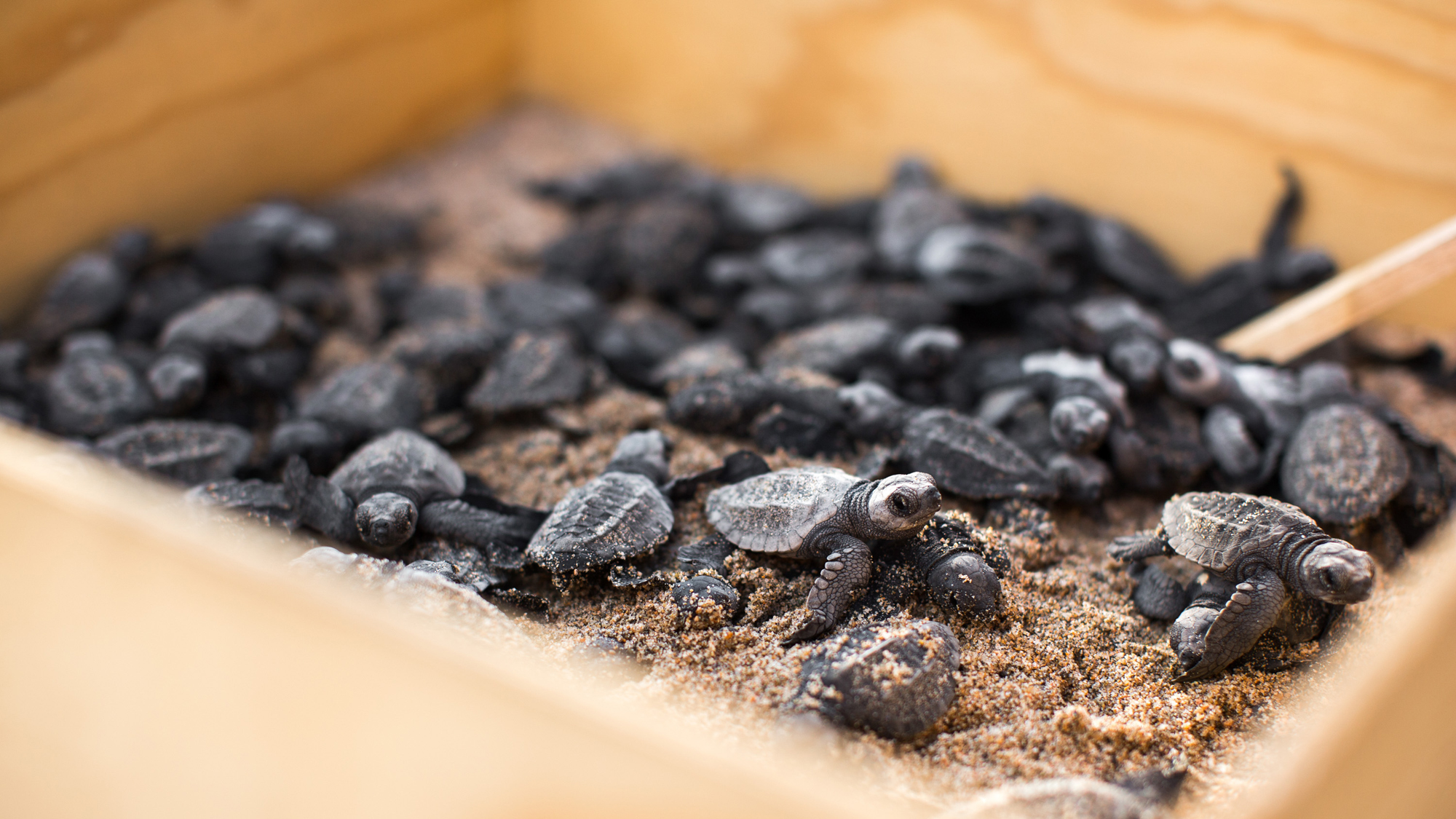
When he built Casa Alborada and started Cuixmala’s turtle conservation program, Sir James did so with Teddy in mind. He wanted to create a place for his brother to visit whenever he wished. The two men shared a conviction that ran deeper than politics or economics: that life itself—ecological, cultural, spiritual—must be placed at the center of human affairs, and that everything else must be arranged to serve it.
Alix Goldsmith Marcaccini, who now stewards both properties with her husband Goffredo and their children, grew up steeped in this worldview. It was not imposed; it was inherited—absorbed through decades of watching her father and uncle work toward the same vision.
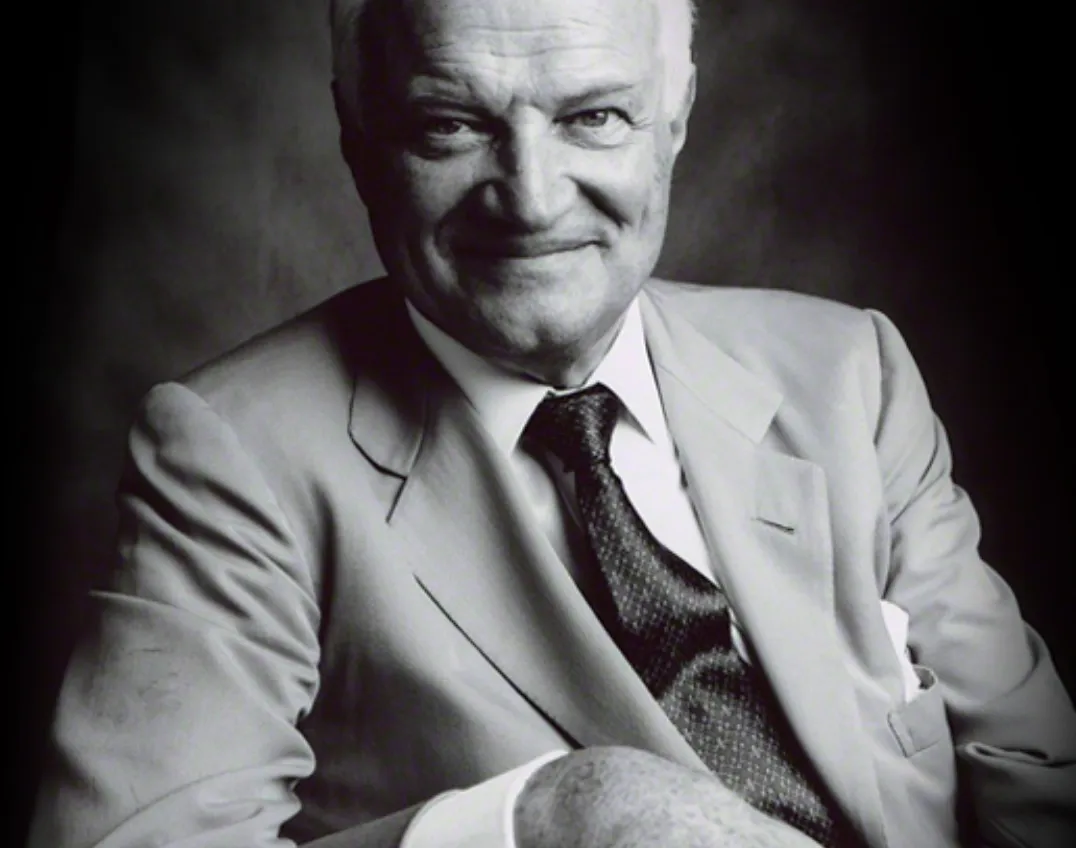
Sir James Goldsmith was, by any conventional measure, one of the most successful financiers of the twentieth century.
From pharmaceutical ventures in his twenties to corporate raids that made him a titan of industry by his fifties, he mastered the mechanisms of global capital with a ruthlessness that earned him both fortune and notoriety. And then he stopped.
After liquidating most of his investments ahead of the Black Monday crash of October 1987, Sir James declared his "active business chapter" closed in 1991.
He had seen something in the machinery he had operated so proficiently—something that called him elsewhere. The system that had given him more than he could ever have imagined was, he believed, impoverishing what mattered most: communities, cultures, the living world itself.
He wrote about this in The Trap, published in 1994. His central argument echoed what Teddy had been saying for decades: we had begun measuring the wrong things.
Gross National Product counts activity—good and bad, constructive and destructive—without distinguishing between them. Sir James praised the King of Bhutan's notion of Gross National Contentment.
He called for science, technology, and markets to be subordinated to "the sacred"—to the needs of stable, contented societies and a thriving biosphere.
He was not against enterprise. He was against enterprise unmoored from the communities, cultures, and ecosystems that give human life meaning.
Cuixmala and Hacienda de San Antonio were where he went to put this philosophy into practice
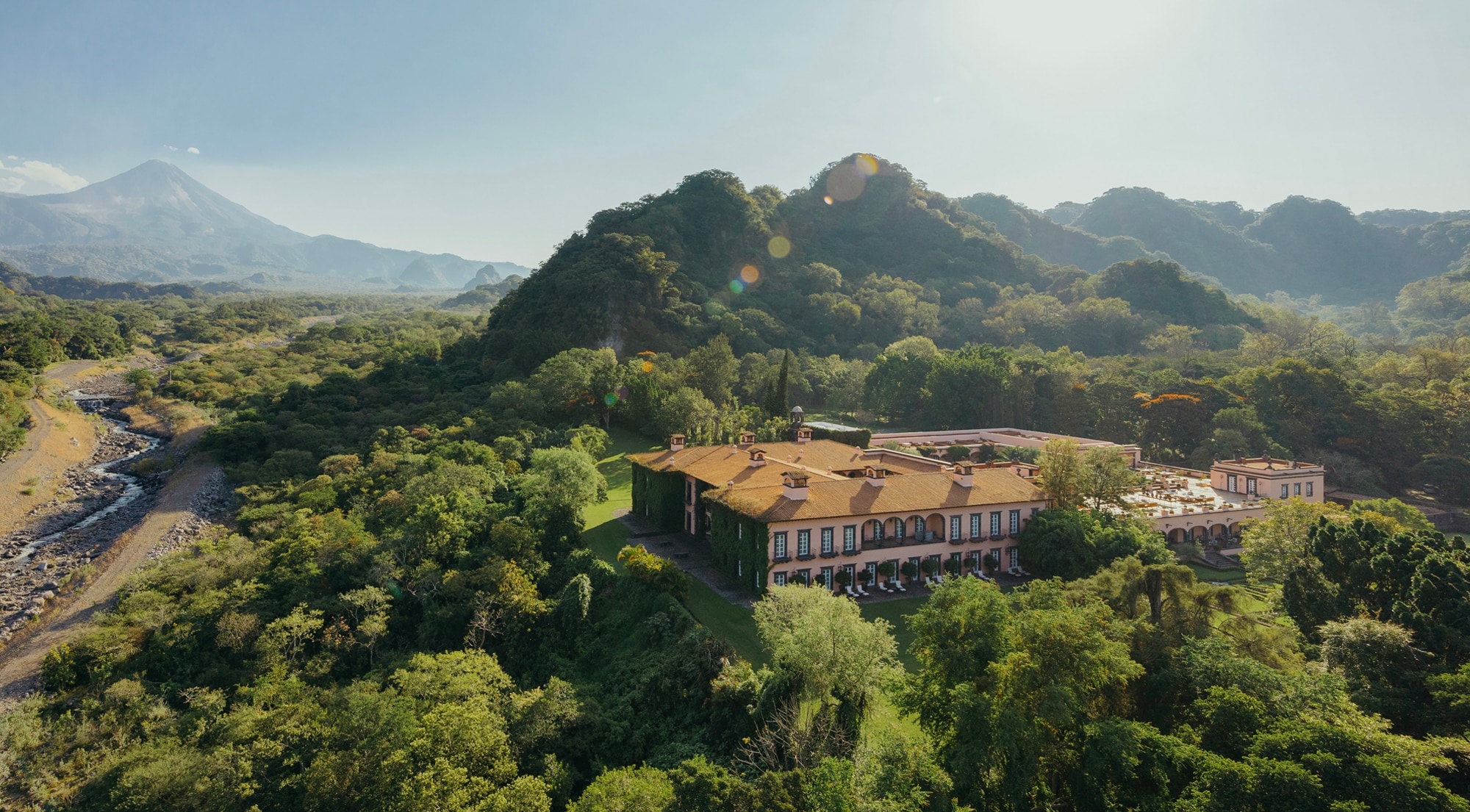
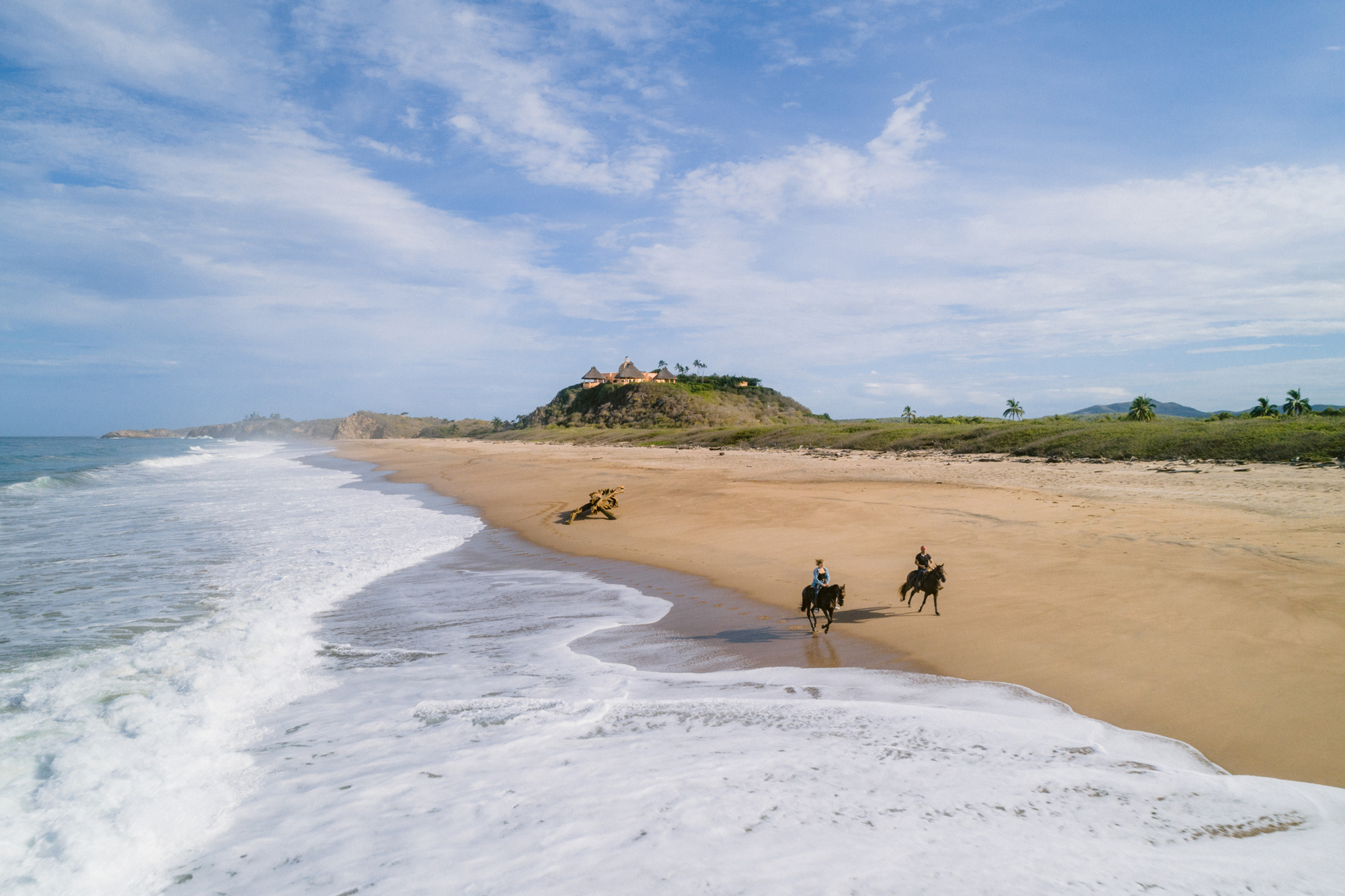
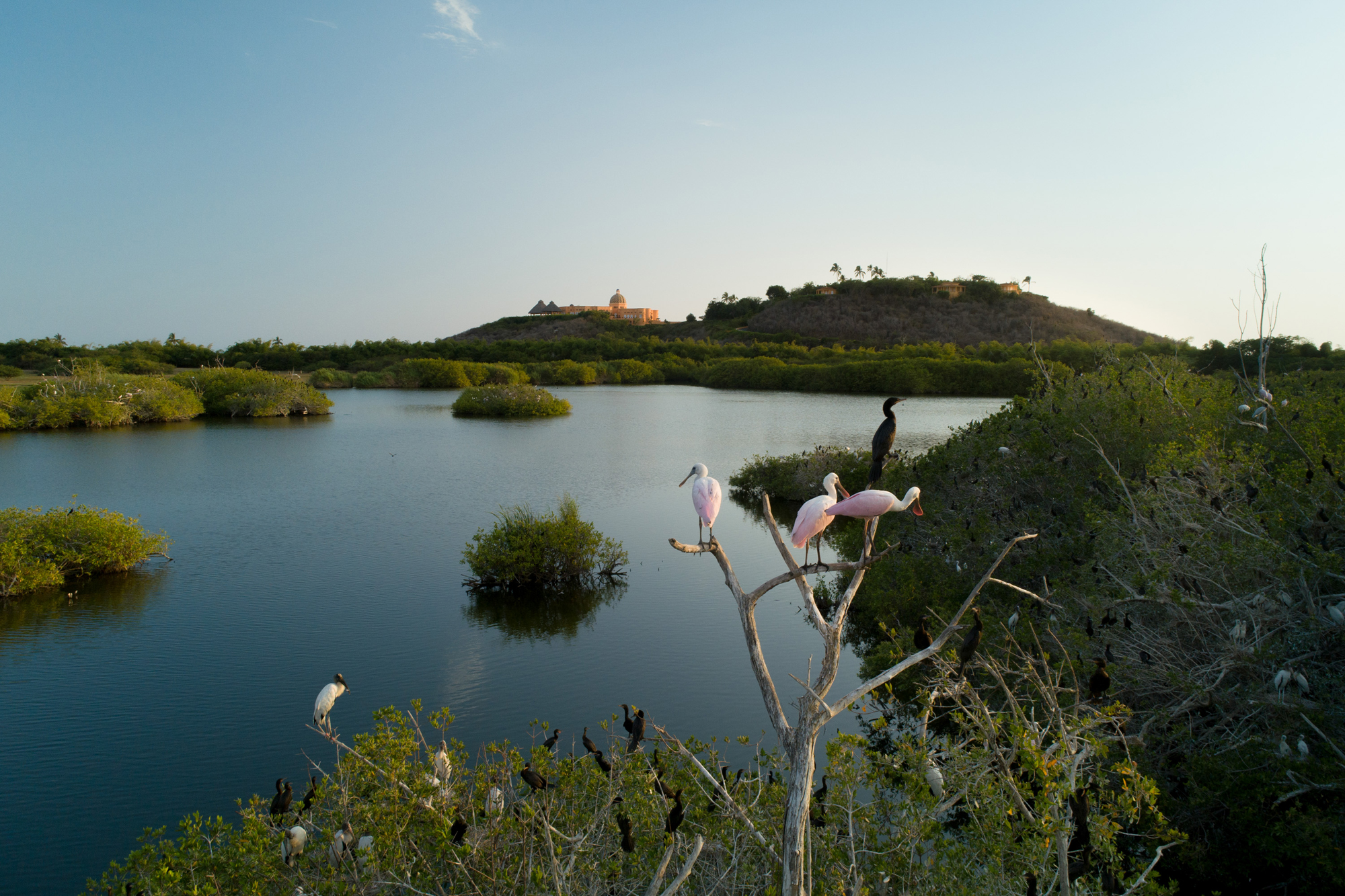
Built from 1987 onwards, the properties could hardly appear more different. Cuixmala sprawls along the Pacific, where dry tropical forest meets white sand and estuaries fill with migratory birds and other species. Hacienda de San Antonio sits in the cool highlands, a working landscape of coffee, cattle, and fertile volcanic soil.
Yet they belong to the same system. The water that falls on the volcano's slopes eventually reaches the coast. The health of the highland forests shapes the health of the fisheries below.
The cattle were moved to the mountains, where they are better attuned to the landscape; the organic produce travels between properties; knowledge and people flow back and forth.
For the agronomists implementing the bio-dynamic methods deployed in both farms, Cuixmala represents the calcium on which it was built — resilient and strong while Hacienda de San Antonio is shaped from silicon, the volcanic quartz that accelerates growth.
Energetically the former takes while the latter gives. Together they create the conditions conducive to life for all the species of the region.
This is more than just a bio-dynamic recipe for healthy soil, this is the Goldsmith worldview made visible and served up daily on a plate: not a single centralized operation, but a network of places, each with its own character and sovereignty, bound together by relationship rather than control.
Teddy believed in diverse cultures pursuing their own ways of life, connected by mutual respect rather than homogenized by global systems. Sir James made that principle concrete at the scale of a family's stewardship.
And now Alix and Goffredo continue the work, carrying forward a mission that began with her uncle's philosophy, her father's resources and has been enriched by their own sensitivity to the needs of the place and the life that it supports.
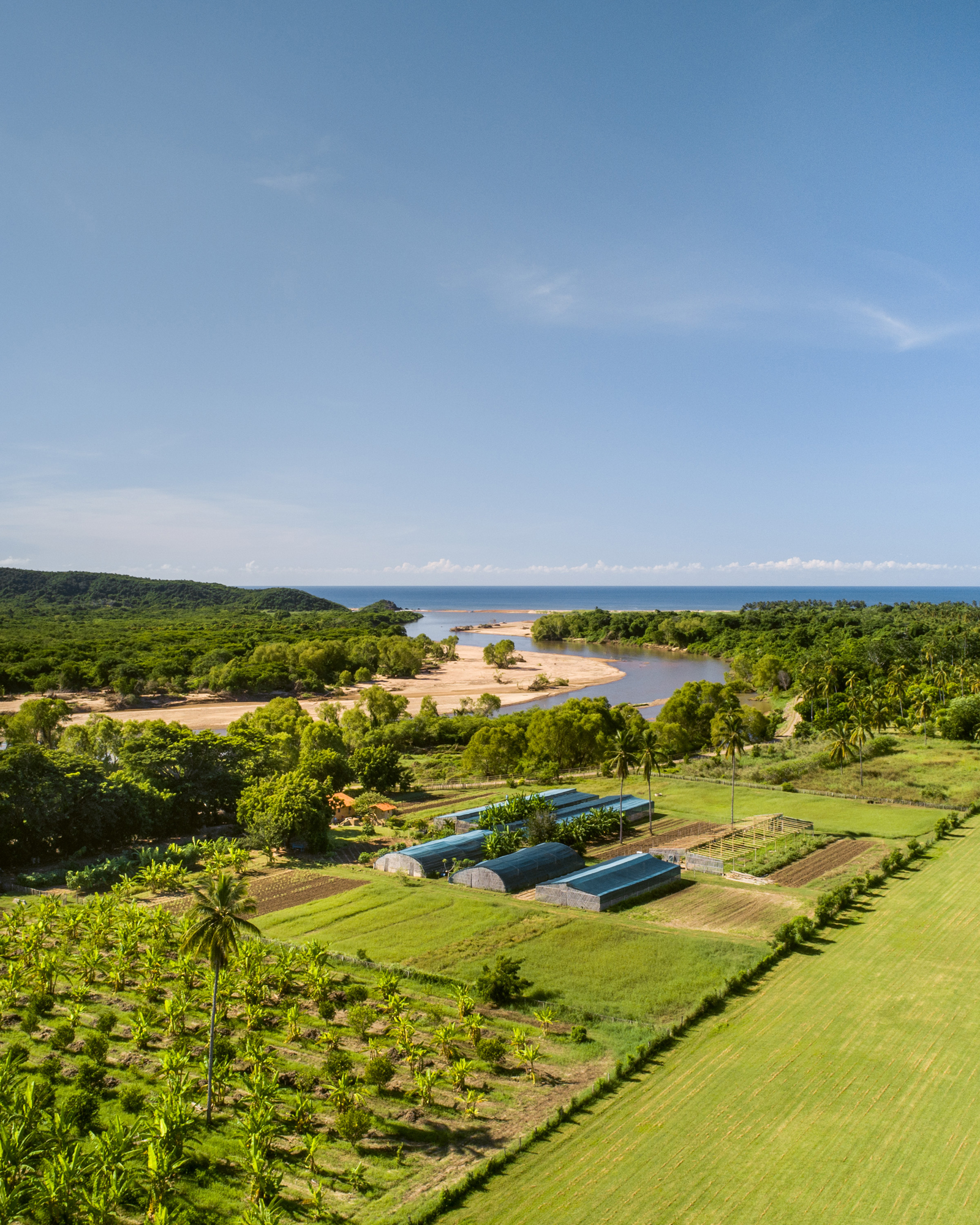
The lessons of four decades cannot be summarized easily, but they have shaped everything about how both properties operate today. The land taught patience.
When the family arrived at Cuixmala, there were no parrots. Hunting had been widespread. It took years of protection before species began to return—first tentatively, then in abundance. Puma sightings went from three in thirty-five years to weekly encounters.
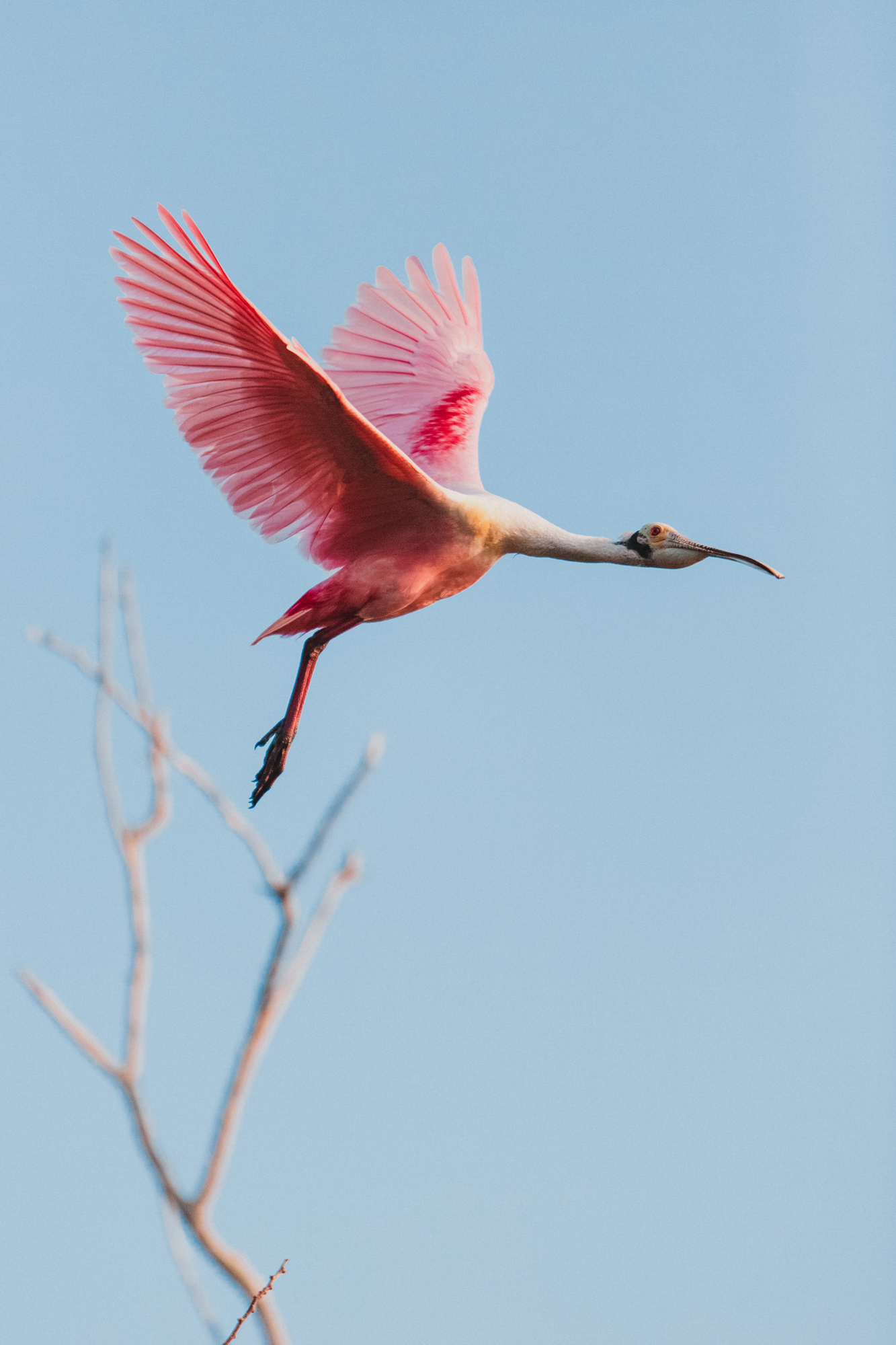
The property now hosts the healthiest population of ocelots and margays in Mexico. The jaguars that give the Chamela-Cuixmala corridor its conservation significance move through land that might otherwise have become golf courses and timeshares.
The land taught humility—and revealed its own mystery. In 2011 and 2015, massive hurricanes struck the coast. Scientists wrote afterwards that the storms had behaved strangely—expected to continue toward Texas with devastating force, something slowed them when they hit Cuixmala.They couldn't explain what happened. The locals were not surprised. This is, after all, the place where the soul goes to rest. Perhaps storms, too, find something here that settles them.
And when the canopy opened, light reached the forest floor. New species emerged. The forest grew back transformed—not diminished, but renewed. Protection, the family learned, is not the same as control. The land has its own intelligence, its own capacity for regeneration.The land taught rootedness.
Many families have worked across both properties for generations. Employees retire, go home for a month, find they miss the brotherhood of the place, and return. In the mountains, smiling employees of Hacienda de San Antonio have worked at the farm for four generations stretching back to its foundation in 1870. The community that has formed is evidence that stability grows from belonging—from people who know the names of local birds and winds, whose children will inherit that knowledge.
The land taught integration. At first, the teams at coast and mountain operated as "two different countries"—separate cultures, little exchange. Over time, the family learned that flows matter.
When channels get blocked, everything stagnates. The work of stewardship is often the work of reopening what has silted up—and recognizing that what happens in the highlands shapes what happens at the shore.

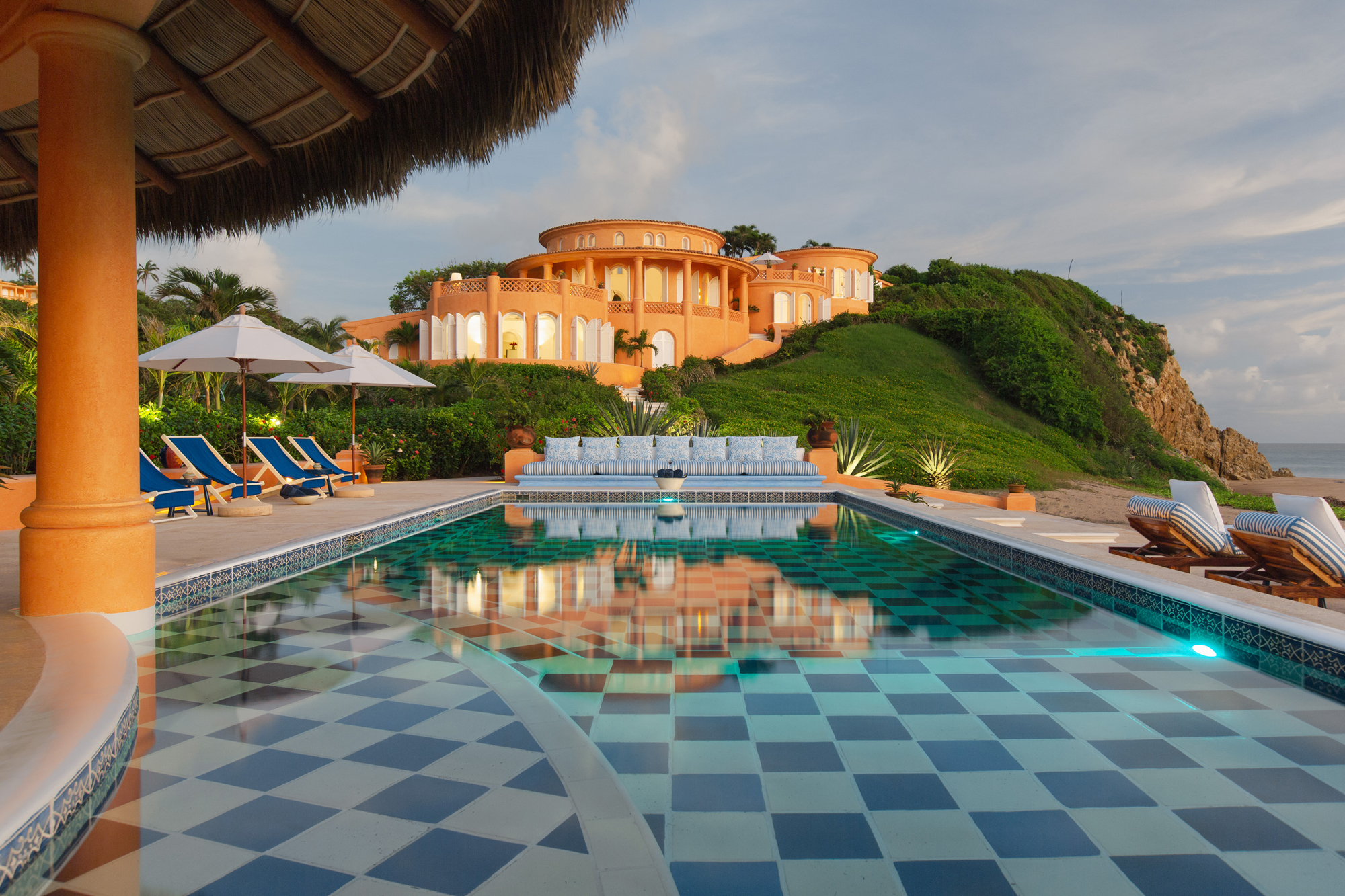
Today, both the properties and Sir James’s legacy have been lovingly cared for by Alix and Goffredo’s family for thirty-five years. As well as his own home, Casa Cuixmala, others were added so he could share the place with those he loved most.
Casa La Playa was built for Alix’s mother Ginette Goldsmith and Casa Puma for her brother, Manes.
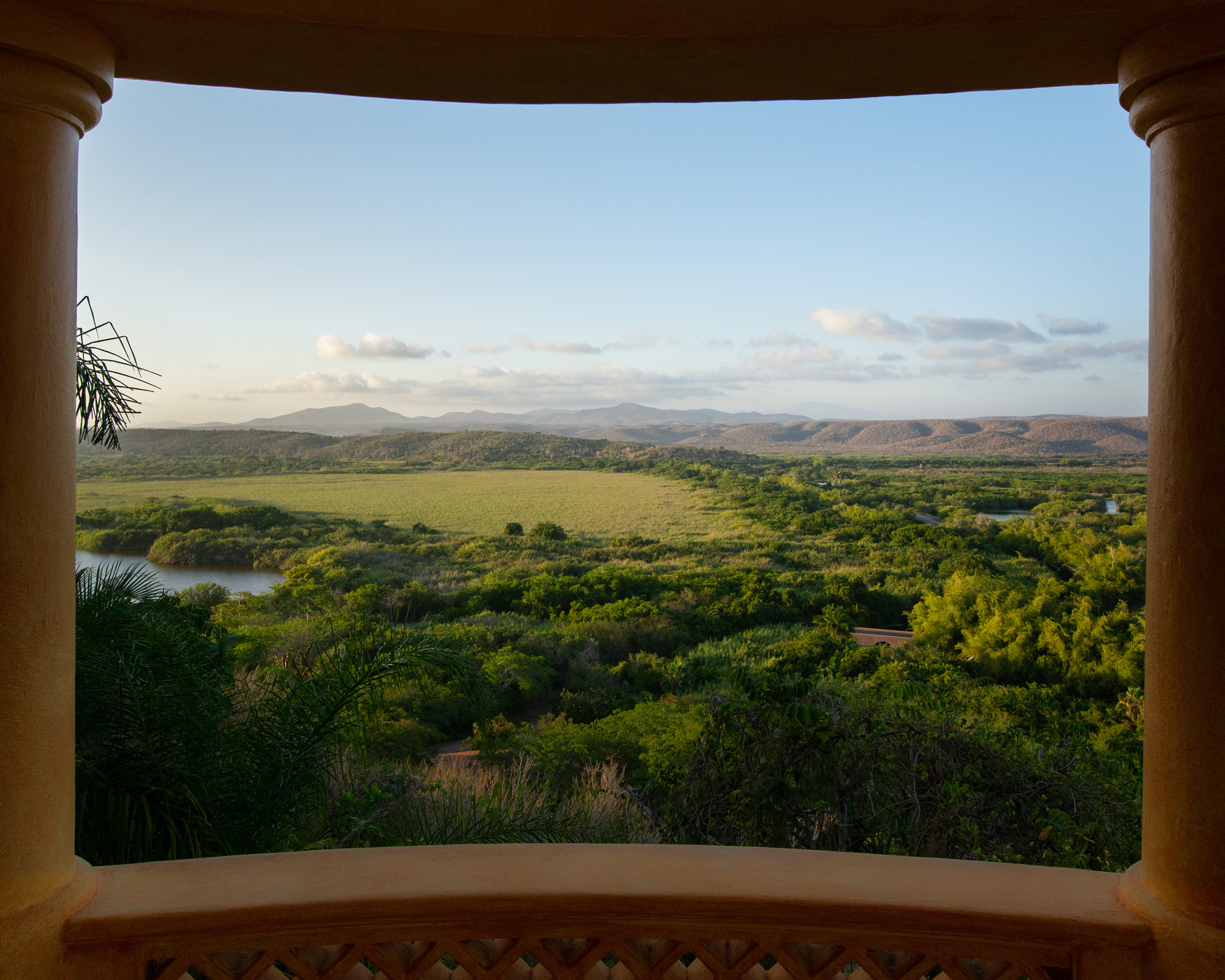
Every night before bed, Alix stands at the edge of the pool at Cuixmala and looks out at the land: "I'm always thanking it for letting me be here, and hoping that it wants me to take care of it like it takes care of me."
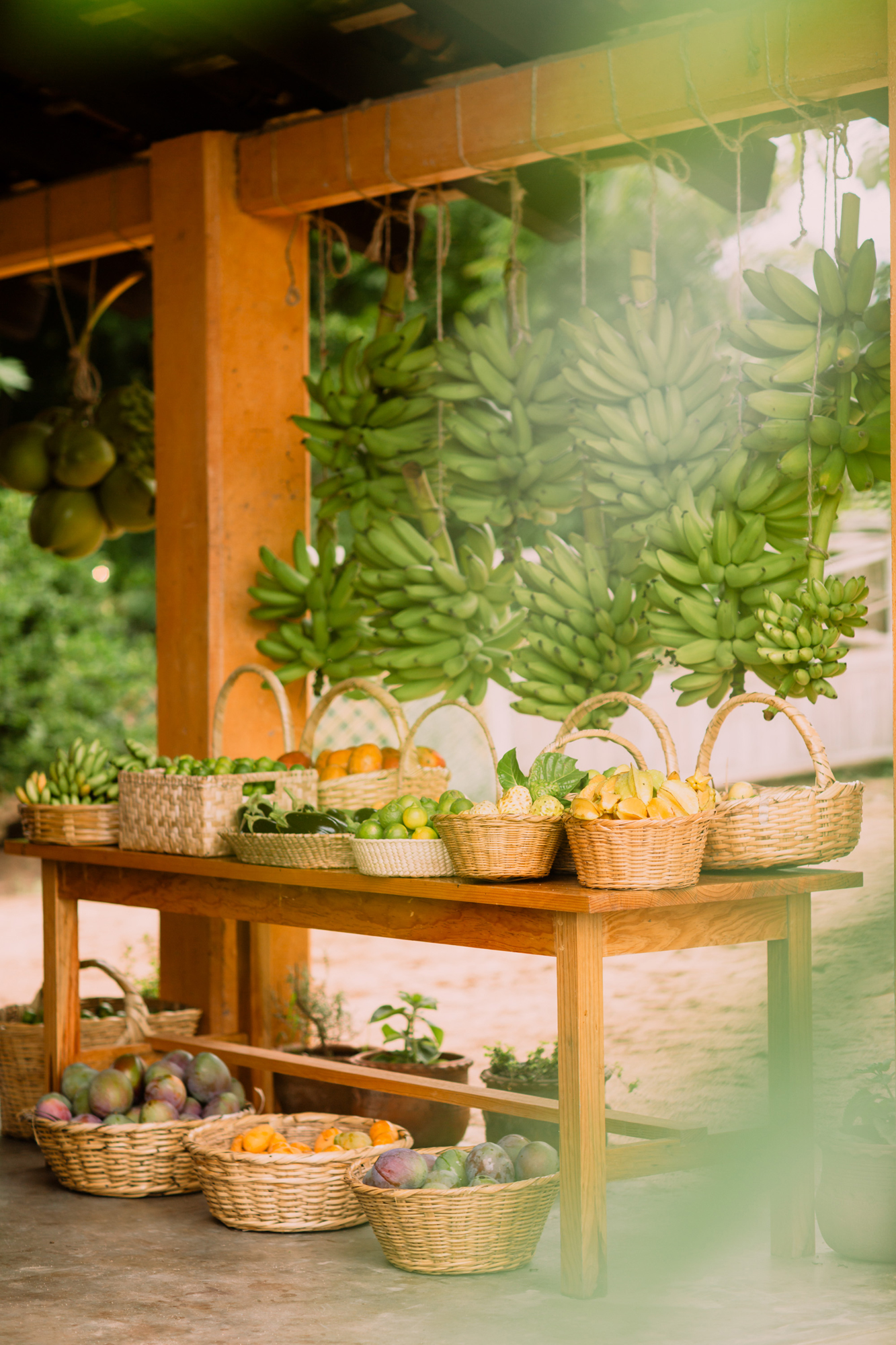
Goffredo speaks of the "tax to the animals"—his favourite tax to pay. Half of what they grow feeds the wildlife: coatis taking coconuts, wild boar and deer moving through the orchards. This is not a loss. It is the cost of membership in an ecosystem.
Teddy's and Sir James's work continues through these places—living laboratories rather than memorials. Experiments, by definition, are never complete.
The family speaks of planting more trees, not for aesthetics but for resilience—anticipating a future where food security matters more than it does today.
They want both properties ready to support not just those within their boundaries, but the villages that surround them.
They speak of expanding bio-dynamic education beyond the fences. In the early years, a car with a loudspeaker would drive through the village announcing courses.
Farmers would gather to learn. That spirit of shared knowledge—of being a school as much as a sanctuary—remains central to the vision Teddy articulated and Sir James made possible.
They speak of inviting guests and planning gatherings for those who share their values: people who, as Alix puts it, "love the soil".
This is where visitors — exotic migratory species attracted to the lush landscape — play their role in nature’s delightful dance.
To visit Cuixmala or Hacienda de San Antonio is not to observe a completed project but to participate in one still unfolding, an ever evolving adventure.
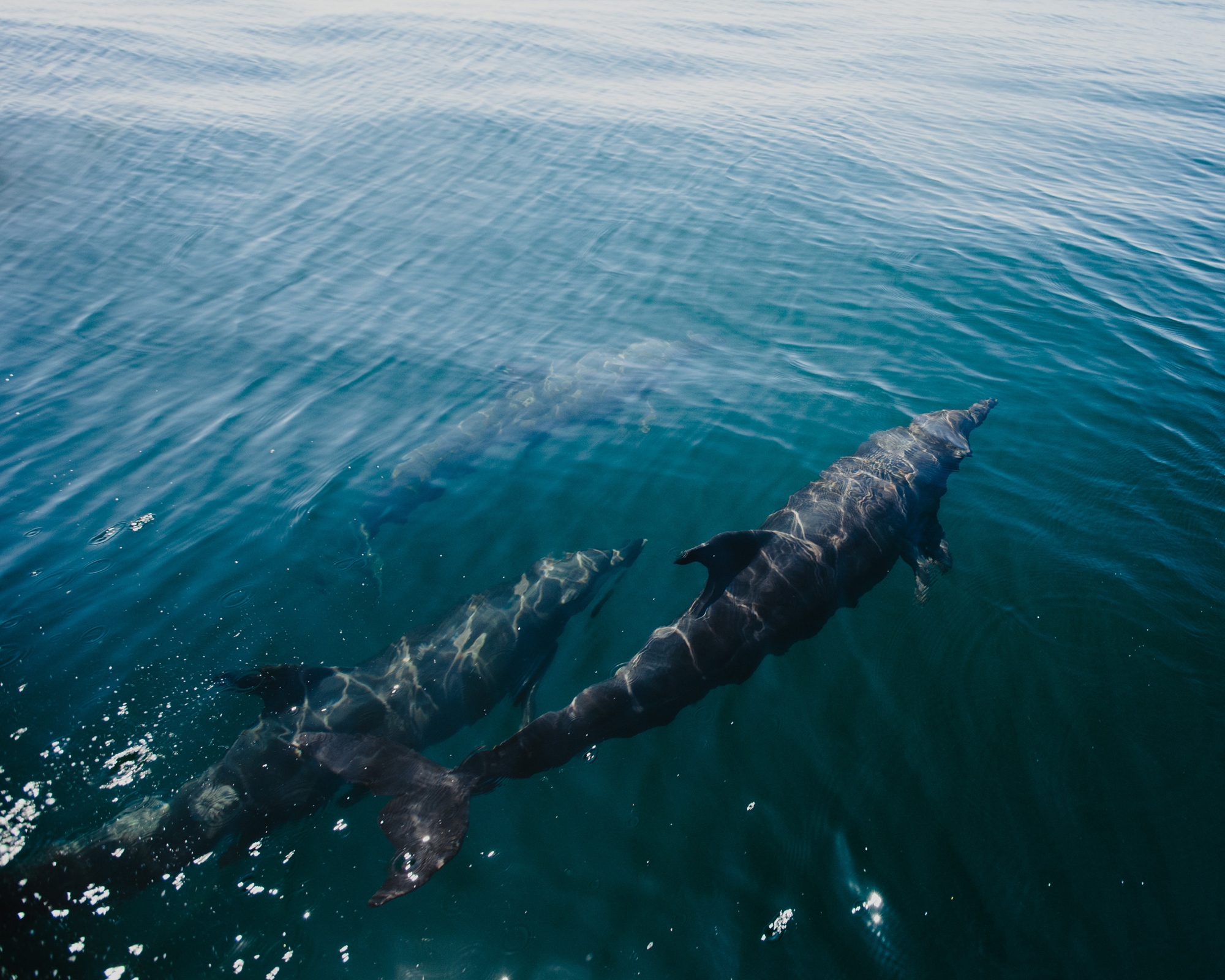
Human visitors are invited to engage with this special place just as other species do. Old friends like the rufous hummingbird, herons and egrets or the lesser long-nosed bats arrive each year in search of sustenance and shelter, sowing seeds for the future and pollinating the plants and cacti that receive them. Always leaving enough behind to ensure they are welcome back every year.
The beauty and comfort these properties offer are not ends in themselves. They are instruments that allow this delicate sanctuary to be protected, research to continue, and regenerative agriculture to expand.
The guest who stays here is not consuming an experience, they are underwriting long-term conservation in two of Mexico's most significant landscapes.
Sir James Goldsmith understood that the people who arrived were often those with power to shape the wider world. He welcomed presidents, diplomats, and titans of industry—and delighted in unsettling them with the wildness of the place.
A snake under the dinner table. The orange eyes of crocodiles on a nighttime row across the lagoon. He wanted his guests to feel something shift. That intention persists. Neither property is a resort with a conservation program attached. Each is a conservation philosophy with hospitality as one of its instruments.
The purpose came first. Everything else follows and flows from that.
For those who arrive, this is the invitation: to step into places where life comes first. To walk beaches and highlands where someone chose protection over profit. To eat food grown in living soil by people who have known this land for generations and have learned to value the cycles of the universe.
To understand that the coffee in the mountains and the fish in the estuary are connected by the same watershed, the same philosophy, the same family's commitment across three generations. The land keeps teaching. The work remains unfinished. The question—for visitors as for stewards—is whether we are willing to listen.
What you encounter here stretches far beyond the overnight comforts of a luxury hotel. It is proof that when purpose prevails: that another way of being in the world is possible, and that some places still encourage us to remember how.
This is where the soul goes to rest—and where it awakens to what matters most.
Sir James Goldsmith - A life well lived
Teddy Goldsmith - the Godfather of Green
The Dangers of Globalization - Download The Trap, 1994
Chamela-Cuixmala Biosphere Reserve
UNAM - Institute of Biology http://www.ibiologia.unam.mx/ebchamela/www/reserva.html
Hacienda de San Antonio Website
Cuixmala Ecological Foundation
Cuixmala
Hacienda de San Antonio
Cuixmala Ecological Foundation
Listening to the Land: Cuixmala
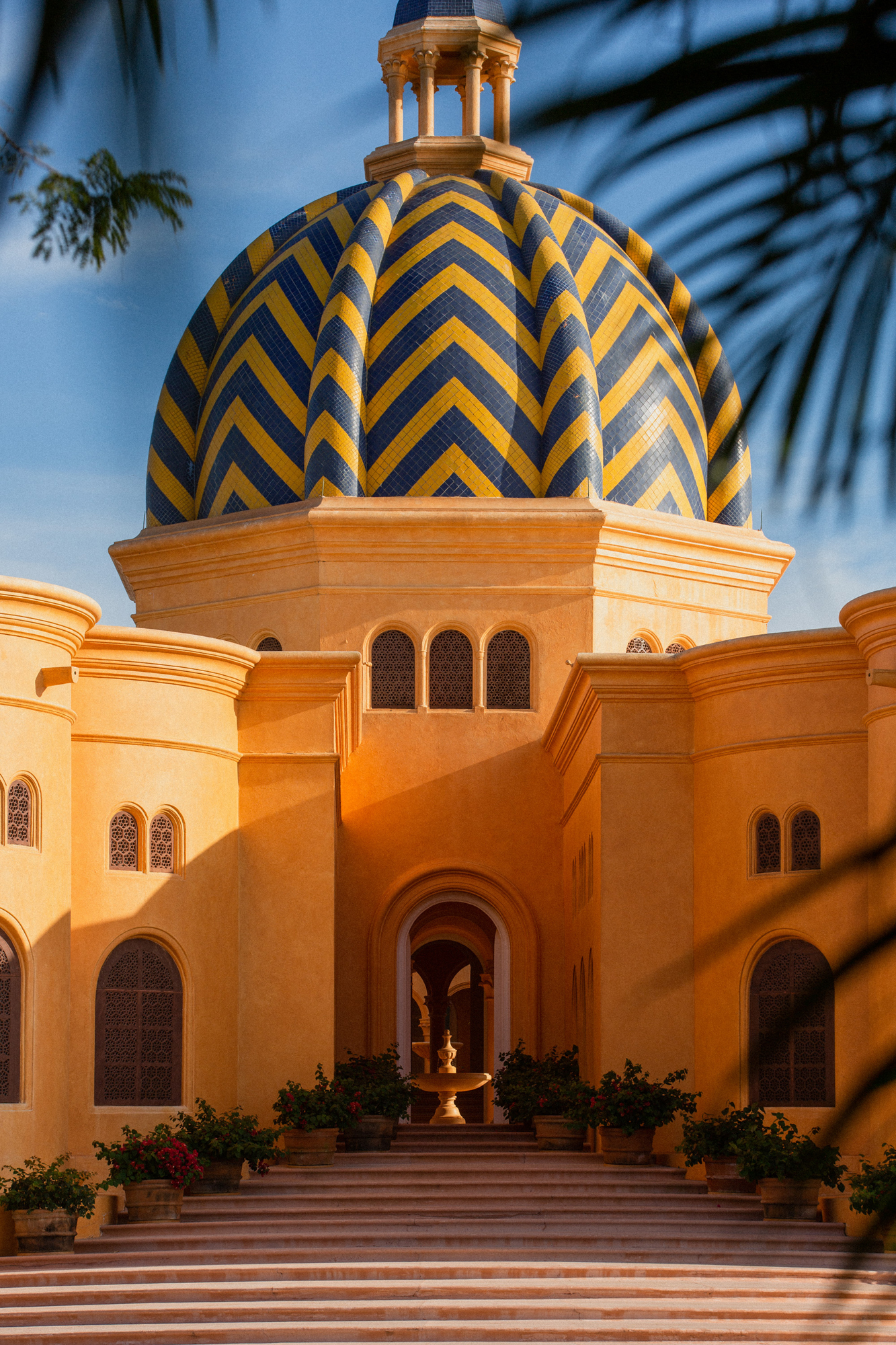
Listening to the landscape, learning from nature