The Wisdom of Place: Learning to Listen to Life


Story: Rainbow Nelson
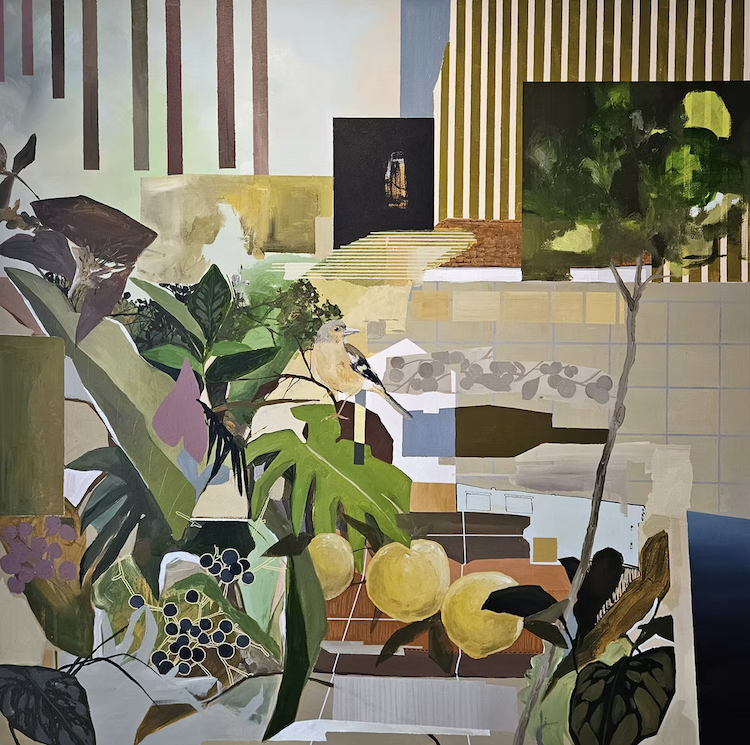
Artwork: Beto Fame
There is an old understanding, held by cultures across the world, that the land speaks to those who learn to listen. Not in words, but in patterns—in the way water carves its path to the sea, in the migrations of birds that have traced the same routes for millennia, in the quiet persistence of organisms that have been solving the problems of existence long before humans arrived.
This is not mysticism. It is observation. And it is the foundation of a practice called the Wisdom of Place.
The first thing to understand is this: the connection between human communities and their landscapes is not something that needs to be created. It already exists. It has always existed. It cannot not exist.
Every village, every city, every organization operates within a living system. The air in any room has been cycled by forests and phytoplankton. The water in any glass has traveled from mountains through aquifers, carrying the memory of rock and root. The food on any plate represents the convergence of soil, sun, rain, and the labor of countless organisms visible and invisible.
We are not separate from the landscapes we inhabit. We are expressions of them.
What has been lost—and what the Wisdom of Place seeks to restore—is not the connection itself, but our awareness of it. Our intentionality about it. Our ability to learn from it.
Imagine looking at a landscape not as a backdrop, but as a text—one that contains everything necessary to understand how life flourishes in this particular place, under these particular conditions.
The Wisdom of Place framework reads this text across multiple dimensions, each nested within the one before it, each impossible without its predecessor.
It begins with energy—the sun's light transformed into every form of life. Then water and minerals, the primordial elements that make biology possible. From these emerge living organisms, weaving themselves into the intricate tapestries we call ecosystems. Ecosystems aggregate into bioregions, shaped by geography and climate. And within these bioregions, human cultures arise—first the indigenous peoples who lived in intimate dialogue with place for thousands of years, and then the modern systems we have constructed atop their wisdom.
Each dimension contains intelligence. Each has been solving problems—how to capture energy, how to cycle nutrients, how to maintain balance across disturbance—for far longer than any human institution has existed.
The species that remain, the processes that persist, the relationships that endure: these are not accidents. They are the survivors of billions of years of experimentation. The 99% that did not contribute to life's continuation are gone. What we see around us is the 1% that learned how to support the conditions conducive to life.
This is the wisdom of place: lessons encoded in landscape, available to anyone who learns to read them.
But how does this wisdom travel? How does it move from the migration patterns of whales to the decisions of development committees? How does the intelligence of an oasis make its way into the strategy of an organization?
Through stories.
Storytelling is the technology that has allowed humans to emerge as one of Earth’s keystone species. We understand ourselves and our place in the world through the stories we tell. These stories are not mere entertainment—they are the operating systems of culture. They determine what we value, what we notice, what we consider possible.
Every landscape generates stories. Some are as old as the formation of the land itself—stories written in the shape of watersheds, in the behavior of endemic species, in the seasonal rhythms that indigenous peoples codified into ceremony and practice. Some are newer—stories of conquest and development, of extraction and efficiency, of progress measured in metrics disconnected from the health of the living world.
The question is not whether stories exist in a landscape. They always do. The question is: which stories are we listening to? Which are we amplifying? Which are we allowing to shape our systems?
The Wisdom of Place offers a way to identify stories that are centered on life—narratives that have proven their worth across dimensions and across time—and to distinguish them from stories that interrupt the flows on which all life depends.
Consider the oasis.
In the desert landscapes of Baja California Sur, oases are not natural formations. They are created through the careful intervention of humans working with the hydrology of the land—capturing water, creating conditions where life can flourish in the midst of scarcity. They have done this for centuries, and the oases have become waypoints not just for human communities but for the migratory species that travel thousands of miles along ancient routes.
Now consider an organization working to transform the food system of that same region. When the Wisdom of Place framework examined this landscape, it found that the organization was already functioning like an oasis—creating centers of life and abundance in communities of scarcity, connecting these centers so that resources and knowledge could flow between them, providing waypoints for the human "migrants" (donors, visitors, collaborators) who move through the region.
This is not metaphor imposed from outside. It is pattern recognized across dimensions. The oasis exists in the hydrology of the land. The oasis exists in the migratory routes of species. The oasis exists in the structure of human settlement. And the oasis exists in the way an organization positions itself within a system.
When the organization recognizes this pattern—when it begins to tell its own story through the lens of the oasis—something shifts. The work gains coherence. Communication becomes clearer. New allies recognize themselves in the narrative. The organization and its landscape begin to move together.
This is what alignment looks like.
In the dominant stories of modern culture, heroes are those who conquer problems—who overcome obstacles through force of will, who bend circumstances to their vision, who succeed against the odds. These stories celebrate intervention, control, solution.
The Wisdom of Place offers different heroes.
Consider the beings in any healthy ecosystem that maintain the conditions for life—not by dramatic intervention, but by their patient, cycling presence. The mycorrhizal networks that distribute nutrients underground. The keystone species whose activities create habitat for hundreds of others. The decomposers that transform death into the substrate for new life. None of these advertise their heroism. None seek to accumulate power. All are essential.
Human landscapes have equivalent heroes: the farmers who understand soil as a living community rather than a production input, the indigenous elders who carry traditional ecological knowledge, the quiet advocates who maintain the channels through which community resources flow. These are people who listen more than they speak, who maintain rather than disrupt, who understand that their role is to support the systems that support life.
The Wisdom of Place helps identify these heroes—human and non-human—and to tell their stories. Because the stories we tell about heroism shape what our systems reward, and what our systems reward determines what they become.
Another pattern that emerges across dimensions in many landscapes concerns the relationship between those who arrive and those who receive.
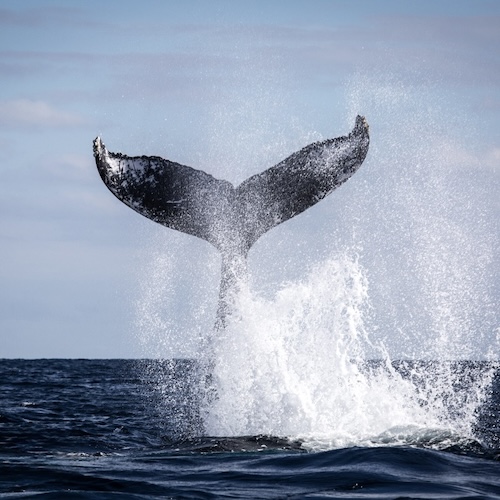
Migratory species travel enormous distances to reach places that will nourish them. A rufous hummingbird flying from Alaska to Mexico, a gray whale traveling from arctic feeding grounds to the warm lagoons of Baja, a monarch butterfly crossing a continent to reach a forest its ancestors knew but it has never seen—each arrives in a place that did not create them, seeking what they need to continue.
But the relationship is not extractive. The arriving species do not simply take and leave. The hummingbird pollinates flowers as it feeds. The whale's nutrient-rich presence fertilizes the waters. The butterfly's journey distributes genetic material across thousands of miles. The visitor, if it knows how to arrive properly, leaves the place better than it found it.
This pattern speaks directly to the modern dilemma of tourism, philanthropy, investment, and development. Visitors arrive in landscapes with resources and needs. How they arrive—with what awareness, with what reciprocity, with what willingness to learn—determines whether they function like the hummingbird or the invasive species.
The Wisdom of Place does not moralize about this. It simply observes: landscapes that have remained healthy over long periods of time have developed protocols for arrival and receiving that benefit both guest and host. These protocols are visible in the behavior of species. They are visible in the traditions of indigenous cultures. They are available to any organization willing to learn them.
Perhaps the deepest shift that the Wisdom of Place invites is in our fundamental orientation.
The modern world has been built on a particular story: that humans are the pinnacle of evolution, the most intelligent beings, the rightful managers of Earth's resources. This story places landscape in the background—a stage on which human dramas unfold, a resource base to be optimized, at best a beautiful setting to be preserved for our enjoyment.
The Wisdom of Place asks: what if we tried a different story?
What if we approached landscape as a teacher rather than a resource? What if we recognized that the intelligence visible in a healthy ecosystem—intelligence about resilience, adaptation, efficiency, collaboration, renewal—exceeds anything human systems have yet achieved? What if, instead of asking how we can manage the land, we asked what the land might teach us about management?
This is not a rejection of human agency. It is an expansion of it. The farmer who learns to read the language of soil biology becomes a better farmer. The organization that understands its landscape's patterns of flow and connection becomes more effective. The investor who recognizes how natural systems build regenerative wealth over time makes wiser choices.
Listening does not mean passivity. It means humility. It means recognizing that the accumulated intelligence of billions of years of evolution might have something to offer our systems, our organizations, our lives.
Across the world, there is a growing recognition that our current systems are not working. They are not working for the majority of humans. They are certainly not working for the other species with whom we share this planet. And at the deepest level, they are not working because they have been built on stories disconnected from the patterns that sustain life.
The Wisdom of Place is not a solution. It is a practice. It is a way of approaching landscape that opens possibilities for the stories we tell, the systems we build, and the alliances we form.
For organizations seeking systemic change, it offers a path to deeper alignment—not alignment with abstract principles, but alignment with the specific, living intelligence of the places where they operate. This alignment attracts resources, builds coherence, and creates the conditions for transformation that lasts.
For individuals, it offers something simpler but perhaps more profound: a way of being in the world that recognizes belonging as fundamental rather than achieved, that sees landscape as teacher rather than backdrop, that understands that the wisdom we seek is already present, encoded in the life around us, waiting to be heard.
The land has always been speaking. The question is whether we are ready to listen.
The Wisdom of Place: Learning to Listen to Life

Listening to the landscape, learning from nature