About GPAA.
In Belo Horizonte, the capital city set against the iron-rich ridges of Minas Gerais, Gustavo Penna Arquiteto & Associados has spent decades asking what architecture owes to the people and places it inhabits.
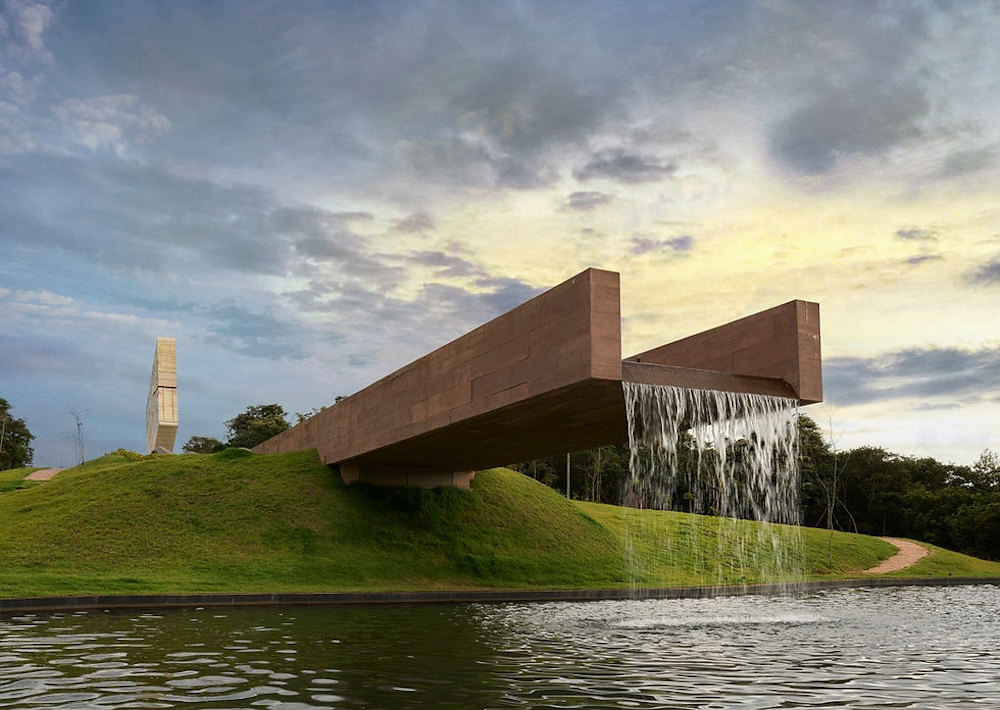
The studio, known as GPAA, brings together more than thirty architects and urbanists working across a range of scales: institutional buildings, cultural landmarks, urban interventions, residences, and commercial commissions. Among their most visible recent works is the Memorial Brumadinho, a project that carries particular weight given that Brumadinho is the municipality in Minas Gerais where a tailings dam collapse in 2019 killed 270 people and poisoned the Paraopeba River.
A memorial there is not a neutral commission. It is a reckoning with place, with loss, and with what built form can hold. The studio has also worked on the Memorial da Imigração Japonesa, recognised by the IF Design Awards in 2020, and competed in the 2014 process for Belo Horizonte's Centro Administrativo. GPAA describes its approach as combining conceptual rigour with careful attention to a client's needs and, in their own words, 'a sensitive interpretation of contemporary challenges'.
The studio, the first in Brazil to be awarded B Corp certification, believes, as it states plainly, that 'architecture is a fundamental element of individual and collective quality of life, and above all, of the formation of culture and identity'.
That conviction shapes how the studio positions itself, not as a service provider optimising for efficiency, but as a cultural actor with a stake in the places it builds within. For those drawn to architecture as a form of civic and cultural stewardship, GPAA's body of work in Minas Gerais offers a point of entry into what it looks like when builders take seriously the question of what a place needs, not only what a client wants.